Dow lost 27, decliners over advancers 3-2 & NAZ gained 22. The MLP index tumbled 10+ to the 307s on the global oil glut & the REIT index rose 1+ to the 377s (another record). Junk bond funds drifted lower & Treasuries were weak. Oil dropped big time to 40 (see below) & gold crawled higher.
Oil fell below $40 a barrel for first time since Apr, falling into a
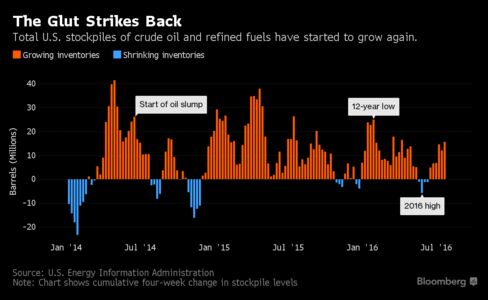
bear market on concern that the global supply glut will expand. Saudi Arabia cut prices to Asian customers as the country continues to fight for market share. Drillers in the US boosted the number of rigs seeking oil for for a 5th week, the longest run of gains since last Aug. US crude & gasoline supplies are at the
highest seasonal level in at least 2 decades. West Texas Intermediate
settled 22% below its Jun peak today, meeting the definition of a bear market.
The persistence
of the supply overhang is upsetting industry expectations. WTI for
Sep delivery dropped 3.7% to close at $40.06 a
barrel, the first
settlement below 200-day moving average since Apr, adding to the
bearish pressure. Saudi Arabian Oil will sell cargoes of Arab Light
in Sep at $1.10 a barrel below Asia's regional benchmark, a
pricing cut of $1.30 from August, the biggest drop since Nov. The
US oil drilling rig count climbed by 3 to 374, the highest level
since Mar & the nation's crude inventories
rose to 521M, keeping supplies more
than 100M barrels above the 5-year average, Energy Information
Administration data show. Demand for crude is set to decline in
the next few months. US refineries typically reduce operating rates to
perform seasonal maintenance as the summer driving season comes to an
end, after the Labor Day holiday in early Sep. Libya's state crude producer is working to resume oil shipments from 3 ports after a deal was struck to settle payments to local guards.
The move may triple production but only after blockades on oil fields
that supply the ports are lifted. National Oil Corp. “will now start
working” with the unity gov to restart exports from the ports of
Ras Lanuf, Es Sider & Zueitina, according to the NOC.
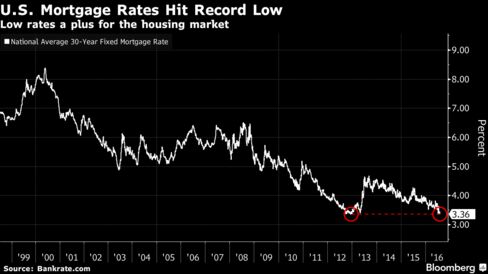
The national average 30-year fixed home mortgage rate in the US fell
to 3.36%, matching the record low first reached in
Dec 2012, according to Bankrate.com. Would-be home-buyers &
homeowners looking to refinance existing mortgages at lower rates have
benefited from a drop in US Treasury yields since UK voters decided
in Jun to leave the EU. A comparable Freddie Mac mortgage
gauge watched by the industry is near a record low, at 3.48%.
China economy watchers were left scratching their heads on the state of the nation's manufacturing in Jul. An
official factory gauge & a private manufacturing measure headed in
different directions, with the gov's reading slipping & Caixin
Media & Markit Economics’s figure released later jumping to
the highest since Feb last year. Some investors
focused on the stronger of the 2, with the Hang Seng China Enterprises
Index rallying. The Shanghai Composite slid amid continuing concern
over potential curbs on wealth management projects. The
official manufacturing purchasing managers index was 49.9 last month,
compared with the Jun reading of 50, which was also the estimate. Non-manufacturing PMI was at 53.9 compared with 53.7 in Jun. As in Jun, drag on official manufacturing index comes from medium & small enterprises. Numbers below 50 indicate conditions are deteriorating. By contrast, manufacturing PMI from Caixin Media & Markit Economics jumped to 50.6 in Jul, from 48.6 in Jun. Both
gauges at least suggest little significant deterioration in China's
important manufacturing sector in Jul. Meantime, the trend of
outperforming services remains clear. On the official gauge, a drop in a
reading of new export orders, combined with a slump in South Korea's
exports last month, suggest global demand remains tepid.
The macro economic news has not been that good but stocks kept rising for months anyway. Falling oil prices are driving that home to the stock market & traders are catching on. As shown in the chart below, Dow remains near its record high. With the disconnect becoming more apparent to investors, there may be more selling in stocks. The new month got off to a disappointing start.
Dow was off 2, decliners over advancers about 5-4 & NAZ added 23. The MLP index rose 3 to the 317s & the REIT index climbed 4+ to the 376s (record high territory). Junk bond funds were lower & Treasuries pulled back. Oil & gold slid lower.
US manufacturing expanded in Jul, though at a slower pace,
indicating gradual improvement that could help the economy emerge from a
weak H1. The Institute for Supply Management index cooled to 52.6 from a
one-year high of 53.2 a month earlier (readings above 50 indicate growth). The
forecast was 53. Factories cut back on employment even as orders & production
remained strong last month, indicating producers are focused on
cost-cutting as the economy struggles to gain speed. Stronger consumer
spending is helping to limit the impact of weaker global demand &
cutbacks in corp investment. The ISM's gauge of new orders was little changed at 56.9
after 57 in Jun & a measure of production picked up to 55.4 from 54.7. The employment index decreased to 49.4 from 50.4 a month earlier, contracting for the 7th time in the
past 8 months, while factory inventories shrank in Jul & prices climbed at a slower pace. Overseas economies have been treading water, limiting demand for
American merchandise. While a gov measure of manufacturing in
China contracted, private gauges showed growth in Jul. Euro-area manufacturing slowed in Jul as uncertainty following
Britain's vote to leave the EU damped orders, according to
Markit Economics.
Federal Reserve Bank of Dallas pres Robert Kaplan said a rate
increase at the next policy meeting in Sep is still possible even
after a report last week showed Q2 growth was weaker than
expected. Growth data will be revised & Fed policy makers will
get 2 more employment reports before the next meeting, Kaplan, who
will have a vote on monetary policy next year, said. He added the Dallas reserve
bank's 2016 growth forecast will still probably call for an expansion of
just less than 2%. "September is very much on the table
but I think we’ll have to see how events unfold and so it’s too soon to
jump to a conclusion," Kaplan said. "We still believe the consumer will
be strong in 2016, but it makes us also be very watchful for the next
number of data releases to see what trend we’re on."
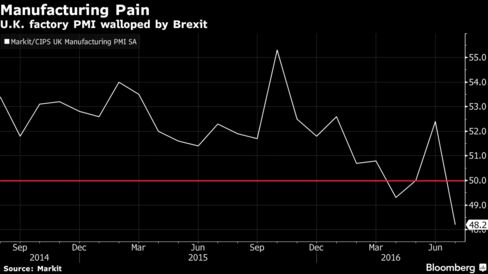
UK manufacturing shrank more than initially forecast in Jul, suffering its biggest drop in more than 3 years. A
Purchasing Managers' Index slumped to 48.2, below the one-off flash
reading of 49.1, Markit Economics said. The index has
only fallen below the 50 mark, which separates expansion from
contraction, one other time since early 2013. The index was at 52.4 in
Jun. The report suggests that Britain's decision to leave the EU may have a harsher impact on the economy than initially expected.
Markit’s flash estimates published last month had already signaled that
business activity was shrinking at its fastest pace since the last
recession 7 years ago. That prompted Bank of England official Martin
Weale to change tack & back his colleagues' call for stimulus this
week.
BOE
policy makers kept the benchmark rate at a record-low 0.5% in
Jul & signaled that loosening was likely in Aug. “The
weak numbers provide powerful arguments for swift policy action,” Markit said. “The downturn was felt across
industry, with output scaled back across firms of all sizes and across
the consumer, intermediate and investment goods sectors.” The
decline in production was the steepest since Oct 2012.
New orders also contracted, suggesting uncertainty in the domestic
market offset any boost to exports from the weaker £. While
manufacturing exports were the only bright spot in the initial report,
Markit said that the improvement was “less marked than previously
estimated” due to sluggish overseas demand. The drop in the currency
pushed input-cost inflation to a 5-year high.
The first reports for Jul were not encouraging. Dow was up 500 last month, not bad when there was little good news to back it up (other than the EU did not collapse after the Brexit vote). Aug may not be so kind.


![Live 24 hours gold chart [Kitco Inc.]](https://lh3.googleusercontent.com/blogger_img_proxy/AEn0k_vuE6lgOp-FQUAxNDdI4IoWKsQ8unj24YKlBZhT7xKPLmKf1loysZ-huiaQQUhFn2vfZpQNPrvmv_RyRlI0RTLS8JSxSCw7ffvDOFGKrsiycB4z0Xwmx7tQLhMqKWgysQ=s0-d)