


Dow lost 42, decliners slightly ahead of advancers & NAZ fell 17. The MLP index was about even in the 358s. Junk bond funds were lower & Treasuries crawled higher. Oil rose in the 61s & gold was flattish at 1323.
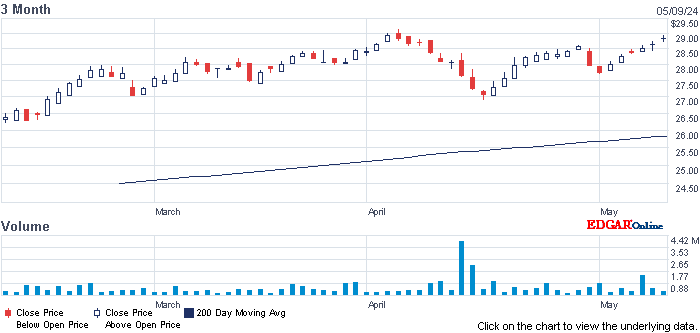
AMJ (Alerian MLP Index tracking fund)


Pres Trump said the US won’t lower tariffs on steel & aluminum from Mexico & Canada unless the 2 countries agree to a revamped Nafta that’s fair to the US. “NAFTA, which is under renegotiation right now, has been a bad deal for U.S.A. Massive relocation of companies & jobs,” the pres twweted. “Tariffs on Steel and Aluminum will only come off if new & fair NAFTA agreement is signed.” Canada must treat American farmers “much better,” & Mexico must stop drugs from “pouring into the U.S.,” he added. It's the latest sign that Trump's plan to impose stiff tariffs on steel & aluminum is overshadowing talks to overhaul the North American Free Trade Agreement. This intervention may complicate a process that had already been yielding little progress on the most contentious issues. The Mexican peso & Canadian $ extended their losses after Trump's comments. Until recently, the US probe into the national-security risks of steel & aluminum has been considered separate from the Nafta discussions. Over the weekend, Trump advisers gave no indication that any countries would be excluded from the tariffs. The 7th round of negotiations wrap up today in Mexico City, & US Trade Representative Robert Lighthizer due to meet with Mexican Economy Minister Ildefonso Guajardo & Canadian Foreign Minister Chrystia Freeland, just hours after Trump's tweet. Trump's decision on tariffs came on Thurs in the middle of talks, catching negotiators off guard. Yesterday, Trump's senior trade advisers & the pres doesn't want any nation excluded from the tariffs, set to be imposed as early as this week. Canada, the biggest supplier of steel & aluminum to the US, & Mexico, the #4 source of steel, have asked to be excluded, & both indicated they will strike back if Trump includes them in the stiff duties. At the Nafta talks, negotiators agreed on 2 more topic areas & discussed details of Canada's idea to redraw the way regional content for cars is measured. Yet work on the autos issue, which may hold the key to the entire deal, has been slow. It now looks impossible for negotiators to meet their goal of getting an agreement by the end of this month, especially amid the prospect of escalating trade tensions from the steel dispute. “I applaud the president for targeting unfairly traded steel and aluminum,” Representative Kevin Brady, a Texas Rep & chairman of the House Ways & Means Committee, said. “But blanket tariffs that also sweep up fairly traded steel and aluminum, especially with trading partners like Canada and Mexico -- they should be excluded.” Progress was made on the “nuts and bolts” of a new Nafta deal, Brady said after being briefed.
Trump Says No Mexico, Canada Steel Break Without Fair Nafta
US service industries expanded in Feb near the fastest pace in at least a decade, signaling the economy is on track for steady growth this qtr, according to a survey from the Institute for Supply Management. Non-manufacturing index eased to 59.5 (est 59) from 59.9 (readings above 50 indicate growth). Measure of business activity rose to almost one-year high of 62.8 & a gauge of new orders jumped to 64.8, highest since 2005, from 62.7. Employment index fell to 55 from the 61.6 Dec reading that was the highest in data back to 1997. The results extend the solid start to the year for services that account for about 90% of the economy & span industries such as retail, utilities, health care, & construction. The Feb index compares with a 57 average for all of 2017. While the services employment index suffered its biggest one- month drop since 2014, the gauge is still in line with its average for last year. In addition, growth in orders & backlogs signals a solid pipeline of business, supported by a tight job market & elevated confidence. A separate ISM survey last week showed manufacturing grew in Feb at the fastest pace since 2004. At the same time, Trump's plan to impose tariffs on imported steel & aluminum has added a headwind to the outlook. His move risks sparking a trade war that could lift inflation, hurt business sentiment & weigh on economic growth. Measure of order backlogs rose 5.5 points to 56, biggest one- month gain since 2013 & export orders measure increased to 59.5 from 58.
Stocks & Treasury yields fell as rhetoric from Trump heightened the threat of a global trade-war. The € fluctuated after Italy's election left the country's political leadership in limbo. The S&P 500 dropped for the 4th time in 5 days after a flurry of tweets from Trump signaled he has no intention of backing down from plans for broad tariffs that could crimp profits at America's biggest companies. Treasuries continued to push higher on a haven bid, while the greenback gained versus most peers with the Canadian $ leading losses. West Texas crude advanced to around $61 a barrel. In Europe, the broadest measure of the region's equities halted a 4-day slide after a major breakthrough on the path to a German gov. Italy's stocks & bonds were the standout losers as anti-establishment political groups surged in yesterday's election. The Italian election result & Germany's move toward a coalition kick off a busy week for macro events. Both the Bank of Japan & ECB will meet to decide on interest rate policy, while China hosts its National People's Congress. Overshadowing it all, however, will be the next developments on global trade after Trump riled markets with his proposed tariffs last week. America won't lower duties on steel & aluminum from Mexico & Canada unless the 2 countries agree to a revamped Nafta, he said. West Texas oil advanced as geopolitical risk resurfaced, with a halt at Libya's biggest crude field sparking speculation that supply will tighten & help reduce a global glut. Shanghai stocks bucked regional weakness as China kept its 2018 growth target of around 6.5%.
The stock market is taking the uncertainty about trade wars more calmly than last week. Sadly, nobody has any idea what this conflict will produce. So, the relatively good news is that price volatility is modest today while uncertainty is riding high. Economic data continues strong in the midst of the trade war talk. The Dow is only about 300 above its recent low.last month.
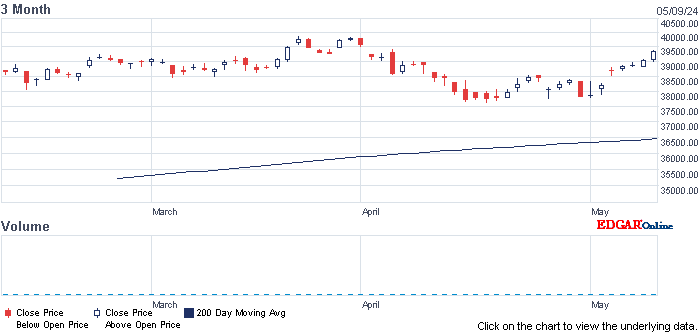
Dow Jones Industrials


AMJ (Alerian MLP Index tracking fund)
| CL=F | Crude Oil | 61.37 | +0.12 | +0.2% |
| GC=F | Gold | 1,322.20 | -1.20 | -0.1% |


Pres Trump said the US won’t lower tariffs on steel & aluminum from Mexico & Canada unless the 2 countries agree to a revamped Nafta that’s fair to the US. “NAFTA, which is under renegotiation right now, has been a bad deal for U.S.A. Massive relocation of companies & jobs,” the pres twweted. “Tariffs on Steel and Aluminum will only come off if new & fair NAFTA agreement is signed.” Canada must treat American farmers “much better,” & Mexico must stop drugs from “pouring into the U.S.,” he added. It's the latest sign that Trump's plan to impose stiff tariffs on steel & aluminum is overshadowing talks to overhaul the North American Free Trade Agreement. This intervention may complicate a process that had already been yielding little progress on the most contentious issues. The Mexican peso & Canadian $ extended their losses after Trump's comments. Until recently, the US probe into the national-security risks of steel & aluminum has been considered separate from the Nafta discussions. Over the weekend, Trump advisers gave no indication that any countries would be excluded from the tariffs. The 7th round of negotiations wrap up today in Mexico City, & US Trade Representative Robert Lighthizer due to meet with Mexican Economy Minister Ildefonso Guajardo & Canadian Foreign Minister Chrystia Freeland, just hours after Trump's tweet. Trump's decision on tariffs came on Thurs in the middle of talks, catching negotiators off guard. Yesterday, Trump's senior trade advisers & the pres doesn't want any nation excluded from the tariffs, set to be imposed as early as this week. Canada, the biggest supplier of steel & aluminum to the US, & Mexico, the #4 source of steel, have asked to be excluded, & both indicated they will strike back if Trump includes them in the stiff duties. At the Nafta talks, negotiators agreed on 2 more topic areas & discussed details of Canada's idea to redraw the way regional content for cars is measured. Yet work on the autos issue, which may hold the key to the entire deal, has been slow. It now looks impossible for negotiators to meet their goal of getting an agreement by the end of this month, especially amid the prospect of escalating trade tensions from the steel dispute. “I applaud the president for targeting unfairly traded steel and aluminum,” Representative Kevin Brady, a Texas Rep & chairman of the House Ways & Means Committee, said. “But blanket tariffs that also sweep up fairly traded steel and aluminum, especially with trading partners like Canada and Mexico -- they should be excluded.” Progress was made on the “nuts and bolts” of a new Nafta deal, Brady said after being briefed.
Trump Says No Mexico, Canada Steel Break Without Fair Nafta
US service industries expanded in Feb near the fastest pace in at least a decade, signaling the economy is on track for steady growth this qtr, according to a survey from the Institute for Supply Management. Non-manufacturing index eased to 59.5 (est 59) from 59.9 (readings above 50 indicate growth). Measure of business activity rose to almost one-year high of 62.8 & a gauge of new orders jumped to 64.8, highest since 2005, from 62.7. Employment index fell to 55 from the 61.6 Dec reading that was the highest in data back to 1997. The results extend the solid start to the year for services that account for about 90% of the economy & span industries such as retail, utilities, health care, & construction. The Feb index compares with a 57 average for all of 2017. While the services employment index suffered its biggest one- month drop since 2014, the gauge is still in line with its average for last year. In addition, growth in orders & backlogs signals a solid pipeline of business, supported by a tight job market & elevated confidence. A separate ISM survey last week showed manufacturing grew in Feb at the fastest pace since 2004. At the same time, Trump's plan to impose tariffs on imported steel & aluminum has added a headwind to the outlook. His move risks sparking a trade war that could lift inflation, hurt business sentiment & weigh on economic growth. Measure of order backlogs rose 5.5 points to 56, biggest one- month gain since 2013 & export orders measure increased to 59.5 from 58.
U.S. Service Industries Grow Near Fastest in at Least a Decade
Stocks & Treasury yields fell as rhetoric from Trump heightened the threat of a global trade-war. The € fluctuated after Italy's election left the country's political leadership in limbo. The S&P 500 dropped for the 4th time in 5 days after a flurry of tweets from Trump signaled he has no intention of backing down from plans for broad tariffs that could crimp profits at America's biggest companies. Treasuries continued to push higher on a haven bid, while the greenback gained versus most peers with the Canadian $ leading losses. West Texas crude advanced to around $61 a barrel. In Europe, the broadest measure of the region's equities halted a 4-day slide after a major breakthrough on the path to a German gov. Italy's stocks & bonds were the standout losers as anti-establishment political groups surged in yesterday's election. The Italian election result & Germany's move toward a coalition kick off a busy week for macro events. Both the Bank of Japan & ECB will meet to decide on interest rate policy, while China hosts its National People's Congress. Overshadowing it all, however, will be the next developments on global trade after Trump riled markets with his proposed tariffs last week. America won't lower duties on steel & aluminum from Mexico & Canada unless the 2 countries agree to a revamped Nafta, he said. West Texas oil advanced as geopolitical risk resurfaced, with a halt at Libya's biggest crude field sparking speculation that supply will tighten & help reduce a global glut. Shanghai stocks bucked regional weakness as China kept its 2018 growth target of around 6.5%.
Stocks Fall as Trade Threats Loom; Dollar Rises: Markets Wrap
The stock market is taking the uncertainty about trade wars more calmly than last week. Sadly, nobody has any idea what this conflict will produce. So, the relatively good news is that price volatility is modest today while uncertainty is riding high. Economic data continues strong in the midst of the trade war talk. The Dow is only about 300 above its recent low.last month.
Dow Jones Industrials


![Live 24 hours gold chart [Kitco Inc.]](https://lh3.googleusercontent.com/blogger_img_proxy/AEn0k_t4697MEbdLizObhIr83vrFA1Qr_6sKyfwEMGmM5o7LLG311ywh8hWxYFjQE0kDSIpjXUCA_JS11uQz92kqh15gC74TGWw8ENUVDgU7HrpqwjwHTz1Tl9c1Y4U8XEJObyQ=s0-d)


