


Dow was off 18, decliners over advancers almost 3-2 & NAZ plunged 102. The MLP index dropped 3+ to the 278s & the REIT index was off 3+ to the 359s. Junk bond funds recovered from yesterday's decline & Treasuries were steady. Oil fell over 1 to the 68s (more below) & gold crawled back 2 to 1201.
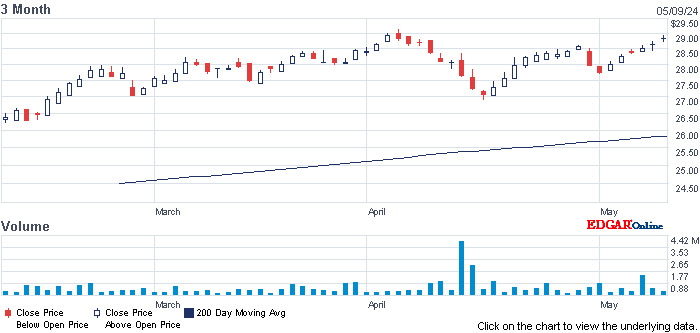
AMJ (Alerian MLP Index tracking fund)


Stocks lower as Wall Street eyes trade talks
The US trade deficit increased to a 5-month high in Jul as exports of soybeans & civilian aircraft declined & imports hit a record high, suggesting that trade could be a drag on economic growth in Q3. The increase was the biggest monthly widening since 2015. The Commerce Dept said the trade gap jumped 9.5% to $50.1B, widening for a 2nd straight month. Data for Jun was revised to show the trade deficit rising to $45.7B, instead of the previously reported $46.3B. The politically sensitive goods trade deficit with China surged 10% to a record $36.8B. The forecast called for the overall trade deficit swelling to $50.3B in Jul. The trade gap continues to widen despite the administration's "America First" policies, which have left the US embroiled in tit-for-tat tariffs with the EU, Canada & Mexico as well as an escalating trade war with China. Pres Trump has defended the duties on steel, aluminum imports & a range of Chinese goods as necessary to protect American industries from what he says is unfair foreign competition. The administration says eliminating the trade deficit will put the economy on a sustainable path of faster growth, an argument that has been dismissed by some as flawed given constraints such as low productivity & slow population growth. The US & China have slapped retaliatory tariffs on a combined $100B of products since early Jul, with more in the pipeline, posing risks to both domestic & global economic growth. The trade gap narrowed in Apr & May as farmers front-loaded soybean exports to China before Beijing's retaliatory tariffs came into effect in early Jul. When adjusted for inflation, the trade gap increased to a 5-month high of $82.5B in Jul from $79.3B in Jun. Jul's real trade deficit is above the Q2 average of $77.5B. If that trend continues in Aug & Sep, trade could subtract from Q3 GDP growth. Trade contributed 1.17 percentage points to the economy's 4.2% annualized growth pace in Q2. In Jul, the trade gap with Mexico narrowed 25.3% to $5.5B while the shortfall with Canada shot up 57.6% to $3.1B. The trade deficit with the EU soared 50% to a record high of $17.6B. In Jul, exports of goods & services fell 1.0% to $211.1B. Soybean exports dropped $0.7B & shipments of civilian aircraft decreased $1.6B. Petroleum exports, however, were the highest on record. Imports of goods & services increased 0.9% to a record $261.2B. They were boosted by imports of computers & computer accessories. The import bill was also inflated by petroleum imports, which were the highest since 2014. The surge reflected higher oil prices. The price of imported crude oil averaged $64.63 per barrel in Jul, up from $62.42 in Jun. There were also increases in imports of automobiles & parts as well as other goods. Pharmaceutical preparations imports, however, fell $1.3B.
Canadian Prime Minister Trudeau indicated Canada would not bend on key demands at talks this week with the US to update the North American Free Trade Agreement. "There are a number of things we absolutely must see in a renegotiated NAFTA," he told reporters in the Pacific province of British Columbia. Officials for both sides are scheduled to meet in DC in a bid to settle major differences.
Oil fell below $78 a barrel as a Gulf tropical storm weakened & moved away from oil-producing areas & concern about weakening global demand added downward pressure. Crude had jumped the previous day as oil companies shut dozens of offshore platforms in anticipation of damage from tropical storm Gordon. By today the storm was weakening, reducing its threat to oil producers. Brent crude, the global benchmark, fell 54¢ to $77.63 a barrel. Yesterday prices had climbed to $79.72, their highest since May. US crude was down 62¢ at $69.25. Oil also weakened as the slide in Turkey's currency & the US-China trade dispute raised demand worries. OPEC Secretary-General Mohammad Barkindo said he expects trade disputes to hit energy demand eventually. Oil could draw some support if weekly reports on US inventories show a drop in crude inventories, as expected. Analysts estimate that stocks fell about 1.9M barrels last week. The American Petroleum Institute, an industry group, releases its supply report in the PM, a day later than usual because of the Labor Day holiday & official gov figures are due tomorrow. US sanctions targeting Iran's oil sector from Nov are already reducing exports from OPEC's 3rd-largest producer & counteracting the impact of an agreement by OPEC & its allies to pump more oil.
Oil drops below $78 as supply concern eases, demand worries mount
Tech sold are being sold, dragging the NAZ below 8K. Tech execs are trying to explain to the Senate about how they are handling so much information. It looks like they do not have a lot of friends in congress, especially after many have become millionaires & even billionaires. So far the selling has not spread to the rest of the stock market in a major way.
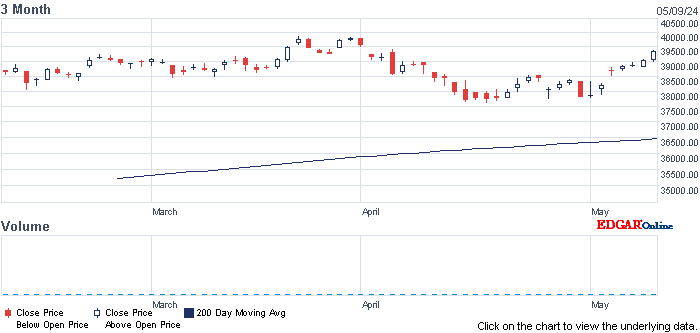
Dow Jones Industrials


AMJ (Alerian MLP Index tracking fund)
| CL=F | Crude Oil | 69.40 | -0.47 | -0.7% |
| GC=F | Gold | 1,202.70 | +3.60 | +0.3% |


Stocks were lower as traders focused on
trade negotiations resume between the US & Canada, after the 2
countries failed to strike a deal last week. A
Canadian delegation heads into trade talks in DC & is determined not to back down on key issues despite threats from
Pres Trump to retaliate. Trump arranged a side deal last week with Mexico & has even mentioned excluding Canada from the pact altogether. Also, another round of duties are scheduled to be
applied to Chinese goods tomorrow. The latest round were initially
proposed at 10%, but Pres Trump directed Trade
Representative Robert Lighthizer to consider raising them to 25%
in response to Chinese retaliation. In
corp news, investors will be watching social media stocks as
Facebook (FB) COO Sheryl Sandberg & Twitter (TWTR) CEO Jack Dorsey answer
questions from the Senate Intelligence Committee about the
companies' responses to how foreign govs use social media to
spread political propaganda. In commodities,
oil futures were lower as concerns about Hurricane Gordon's potential
impact on oil production in the Gulf of Mexico abated. Stocks
fell on yesterday as traders returned to work from the long weekend,
turning their attention to NAFTA negotiations & a busy economic data
calendar. The Dow
dropped 12 to 25,952 & the S&P 500 was
down 4, closing at 2896. The NAZ edged 18 lower (0.2%) to 8091.
Stocks lower as Wall Street eyes trade talks
The US trade deficit increased to a 5-month high in Jul as exports of soybeans & civilian aircraft declined & imports hit a record high, suggesting that trade could be a drag on economic growth in Q3. The increase was the biggest monthly widening since 2015. The Commerce Dept said the trade gap jumped 9.5% to $50.1B, widening for a 2nd straight month. Data for Jun was revised to show the trade deficit rising to $45.7B, instead of the previously reported $46.3B. The politically sensitive goods trade deficit with China surged 10% to a record $36.8B. The forecast called for the overall trade deficit swelling to $50.3B in Jul. The trade gap continues to widen despite the administration's "America First" policies, which have left the US embroiled in tit-for-tat tariffs with the EU, Canada & Mexico as well as an escalating trade war with China. Pres Trump has defended the duties on steel, aluminum imports & a range of Chinese goods as necessary to protect American industries from what he says is unfair foreign competition. The administration says eliminating the trade deficit will put the economy on a sustainable path of faster growth, an argument that has been dismissed by some as flawed given constraints such as low productivity & slow population growth. The US & China have slapped retaliatory tariffs on a combined $100B of products since early Jul, with more in the pipeline, posing risks to both domestic & global economic growth. The trade gap narrowed in Apr & May as farmers front-loaded soybean exports to China before Beijing's retaliatory tariffs came into effect in early Jul. When adjusted for inflation, the trade gap increased to a 5-month high of $82.5B in Jul from $79.3B in Jun. Jul's real trade deficit is above the Q2 average of $77.5B. If that trend continues in Aug & Sep, trade could subtract from Q3 GDP growth. Trade contributed 1.17 percentage points to the economy's 4.2% annualized growth pace in Q2. In Jul, the trade gap with Mexico narrowed 25.3% to $5.5B while the shortfall with Canada shot up 57.6% to $3.1B. The trade deficit with the EU soared 50% to a record high of $17.6B. In Jul, exports of goods & services fell 1.0% to $211.1B. Soybean exports dropped $0.7B & shipments of civilian aircraft decreased $1.6B. Petroleum exports, however, were the highest on record. Imports of goods & services increased 0.9% to a record $261.2B. They were boosted by imports of computers & computer accessories. The import bill was also inflated by petroleum imports, which were the highest since 2014. The surge reflected higher oil prices. The price of imported crude oil averaged $64.63 per barrel in Jul, up from $62.42 in Jun. There were also increases in imports of automobiles & parts as well as other goods. Pharmaceutical preparations imports, however, fell $1.3B.
Canadian Prime Minister Trudeau indicated Canada would not bend on key demands at talks this week with the US to update the North American Free Trade Agreement. "There are a number of things we absolutely must see in a renegotiated NAFTA," he told reporters in the Pacific province of British Columbia. Officials for both sides are scheduled to meet in DC in a bid to settle major differences.
Oil fell below $78 a barrel as a Gulf tropical storm weakened & moved away from oil-producing areas & concern about weakening global demand added downward pressure. Crude had jumped the previous day as oil companies shut dozens of offshore platforms in anticipation of damage from tropical storm Gordon. By today the storm was weakening, reducing its threat to oil producers. Brent crude, the global benchmark, fell 54¢ to $77.63 a barrel. Yesterday prices had climbed to $79.72, their highest since May. US crude was down 62¢ at $69.25. Oil also weakened as the slide in Turkey's currency & the US-China trade dispute raised demand worries. OPEC Secretary-General Mohammad Barkindo said he expects trade disputes to hit energy demand eventually. Oil could draw some support if weekly reports on US inventories show a drop in crude inventories, as expected. Analysts estimate that stocks fell about 1.9M barrels last week. The American Petroleum Institute, an industry group, releases its supply report in the PM, a day later than usual because of the Labor Day holiday & official gov figures are due tomorrow. US sanctions targeting Iran's oil sector from Nov are already reducing exports from OPEC's 3rd-largest producer & counteracting the impact of an agreement by OPEC & its allies to pump more oil.
Oil drops below $78 as supply concern eases, demand worries mount
Tech sold are being sold, dragging the NAZ below 8K. Tech execs are trying to explain to the Senate about how they are handling so much information. It looks like they do not have a lot of friends in congress, especially after many have become millionaires & even billionaires. So far the selling has not spread to the rest of the stock market in a major way.
Dow Jones Industrials


![Live 24 hours gold chart [Kitco Inc.]](https://www.kitco.com/images/live/gold.gif?0.2180338269244485)


