


Dow shot up 110 (a choppy session with buying in the PM), advancers over decliners about 2-1 & NAZ rose 61. The MLP index crawled up to the 247s & the REIT index was fractionally higher to the 365s. Junk bond funds remained lower & Treasuries were sold. Oil sank 1+ to the 55s & gold tumbled 21 to 1294 (more on both below).
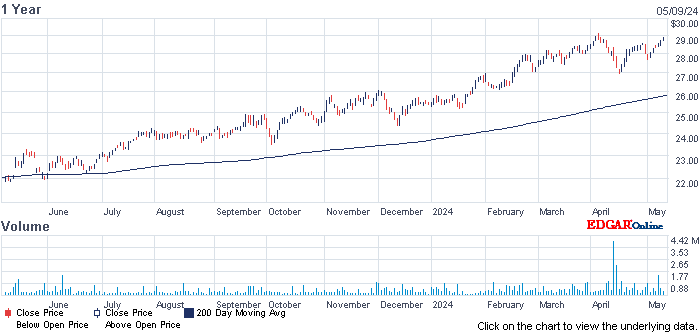
AMJ (Alerian MLP Index tracking fund)
![Live 24 hours gold chart [Kitco Inc.]](https://www.kitco.com/images/live/gold.gif?0.2180338269244485)


Kudlow drops US, China trade-deal bombshell
The Atlanta Fed's GDPNow initial model estimate shows negligible growth for Q1 of just 0.3%. The Atlanta Fed noted today that the 2.6% estimate on Q4-2018 real GDP growth was slightly above the forecast it released earlier in the week. The Q1 report, which was released on the Atlanta Fed's website, sent stocks lower earlier today, but they later recovered. Many economists see growth below 2% for the qtr, but for the most part they remain above 1% & economists mostly expect a snap back in Q2. Today's data included personal consumption expenditures, ISM manufacturing & consumer sentiment, all of which came in below forecast. The spending stats included Dec's data that had been delayed due to the gov shutdown. Many economists expect the weakness in Q1 to be transitory, with the consumer and businesses affected by the shutdown & severely cold weather brought on by the polar vortex. There are also signs that the trade conflicts have impacted some parts of the economy.
Atlanta Fed’s closely watched GDP tracker shows next to no growth for first quarter
Atlanta Fed Pres Raphael Bostic said he still expects the central bank to raise rates once this year. In a discussion, Bostic said he still expects the central bank to raise rates once this year. He expected late last year that growth would slow in 2019. This was natural as some of the stimulus from the Trump tax cut & higher gov spending started to wane. So far, economic data in 2019 has been weak, confirming his expectation of slower growth, he added. Earlier today, the Institute for Supply Management (ISM) said its manufacturing index fell to the lowest level since Nov 2016. Whether the data is pointing to growth returning to 2% “trend” growth rate or to a more significant slowdown won’t be known for a few months, he said. “I just don’t know.” The spotty economic data at the start of the year stemming from the partial gov shutdown just added to the uncertainty, he added. “There is a lot that has to sort itself out,” he said. Bostic expects inflation to pick up this year. This wasn’t a worry, he added. What did concern him was that the market seems to think the Fed's 2% inflation target is a ceiling. Bostic stressed he would not “panic” if inflation moves a little above the Fed's 2% target. He said a 2.5%, 2.7% or 2.9% annual inflation rate would deserve a policy tightening. “But 2.1% or even 2.15% [rate] I’m going to be ok with that,” he said. It will also depend what businesses report about the outlook for prices, he added.
Oil futures settled sharply lower, with US prices losing 2.6% for the week as declines in the US ISM manufacturing index & consumer sentiment, on the heels of weak Chinese factory activity, fed worries over a potential slowdown in energy demand. Apr West Texas Intermediate oil fell $1.42 (2.5%) to settle at $55.80 a barrel.
Gold futures dropped below the key $1300 mark to settle at their lowest in 6 weeks, down over 2% from a week ago & the sharpest weekly fall since Aug. An overall risk-on sentiment, which boosted US & global stocks, as well as strength in the $ worked to dull demand for the precious metal. The precious metal only managed to briefly pare some of its earlier losses, as the $'s weakness in the immediate wake of cooler-than-expected ISM manufacturing & consumer-sentiment readings proved to be short-lived. Apr gold fell $17 (1.3%) to settle at $1299 an ounce. It marked the lowest most-active contract settlement since Jan 25. For the week, bullion was down about 2.5%, which was the steepest weekly percentage decline for a most-active contract since mid Aug. Today, data showed the final reading of the Univ of Mich consumer sentiment index faded in Feb, with a 93.8 reading, below the consensus estimate of 95.6. American manufacturing grew their businesses in Feb at the slowest pace since the election of Pres Trump in Nov 2016, with the ISM manufacturing survey falling to 54.2 in Feb from 56.6.
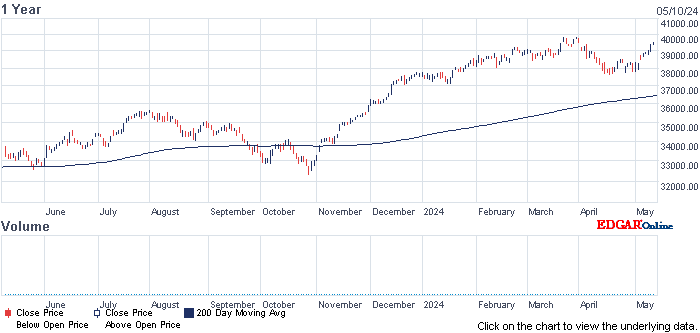
The Dow finished with a weekly loss of 5, not quite good enough for its 10th consecutive weekly advance. A new trade deal with China should give it a big boost, but that continues to be uncertain. Meanwhile, economic data continues to be soggy & that makes traders nervous about taking stocks higher.
Dow Jones Industrials


AMJ (Alerian MLP Index tracking fund)


Is a trade deal between the US & China about to ignite? According to top White House adviser Larry Kudlow, US Trade Representative Robert Lighthizer “really lit a fire under it.” “We made so much progress last week when the Chinese were here," he said today. “The agreements made last week represent tremendous progress on IP theft, on forced technology transfer, on ownership, on cyber interference & maybe most importantly on enforcement.” Kudlow added that the agreement would open the door for American export sales to soar. “What we have is vastly greater than just buying
some soybeans,” he said. "It’s virtually a revolution in
American-Chinese trade -- it could be a historical breakthrough.” Although
Kudlow is unsure whether Pres Xi will give his stamp of approval
on the agreements, he said, Trump & Xi could “sign and seal” a deal
during a meeting this month at Mar-a-Lago.
Kudlow drops US, China trade-deal bombshell
The Atlanta Fed's GDPNow initial model estimate shows negligible growth for Q1 of just 0.3%. The Atlanta Fed noted today that the 2.6% estimate on Q4-2018 real GDP growth was slightly above the forecast it released earlier in the week. The Q1 report, which was released on the Atlanta Fed's website, sent stocks lower earlier today, but they later recovered. Many economists see growth below 2% for the qtr, but for the most part they remain above 1% & economists mostly expect a snap back in Q2. Today's data included personal consumption expenditures, ISM manufacturing & consumer sentiment, all of which came in below forecast. The spending stats included Dec's data that had been delayed due to the gov shutdown. Many economists expect the weakness in Q1 to be transitory, with the consumer and businesses affected by the shutdown & severely cold weather brought on by the polar vortex. There are also signs that the trade conflicts have impacted some parts of the economy.
Atlanta Fed’s closely watched GDP tracker shows next to no growth for first quarter
Atlanta Fed Pres Raphael Bostic said he still expects the central bank to raise rates once this year. In a discussion, Bostic said he still expects the central bank to raise rates once this year. He expected late last year that growth would slow in 2019. This was natural as some of the stimulus from the Trump tax cut & higher gov spending started to wane. So far, economic data in 2019 has been weak, confirming his expectation of slower growth, he added. Earlier today, the Institute for Supply Management (ISM) said its manufacturing index fell to the lowest level since Nov 2016. Whether the data is pointing to growth returning to 2% “trend” growth rate or to a more significant slowdown won’t be known for a few months, he said. “I just don’t know.” The spotty economic data at the start of the year stemming from the partial gov shutdown just added to the uncertainty, he added. “There is a lot that has to sort itself out,” he said. Bostic expects inflation to pick up this year. This wasn’t a worry, he added. What did concern him was that the market seems to think the Fed's 2% inflation target is a ceiling. Bostic stressed he would not “panic” if inflation moves a little above the Fed's 2% target. He said a 2.5%, 2.7% or 2.9% annual inflation rate would deserve a policy tightening. “But 2.1% or even 2.15% [rate] I’m going to be ok with that,” he said. It will also depend what businesses report about the outlook for prices, he added.
Fed’s Bostic sticks to forecast of one interest-rate hike this year
Oil futures settled sharply lower, with US prices losing 2.6% for the week as declines in the US ISM manufacturing index & consumer sentiment, on the heels of weak Chinese factory activity, fed worries over a potential slowdown in energy demand. Apr West Texas Intermediate oil fell $1.42 (2.5%) to settle at $55.80 a barrel.
Oil futures settle sharply lower, with U.S. prices down 2.6% for the week
Gold futures dropped below the key $1300 mark to settle at their lowest in 6 weeks, down over 2% from a week ago & the sharpest weekly fall since Aug. An overall risk-on sentiment, which boosted US & global stocks, as well as strength in the $ worked to dull demand for the precious metal. The precious metal only managed to briefly pare some of its earlier losses, as the $'s weakness in the immediate wake of cooler-than-expected ISM manufacturing & consumer-sentiment readings proved to be short-lived. Apr gold fell $17 (1.3%) to settle at $1299 an ounce. It marked the lowest most-active contract settlement since Jan 25. For the week, bullion was down about 2.5%, which was the steepest weekly percentage decline for a most-active contract since mid Aug. Today, data showed the final reading of the Univ of Mich consumer sentiment index faded in Feb, with a 93.8 reading, below the consensus estimate of 95.6. American manufacturing grew their businesses in Feb at the slowest pace since the election of Pres Trump in Nov 2016, with the ISM manufacturing survey falling to 54.2 in Feb from 56.6.
Gold drops below $1,300, logs steepest weekly fall since August
The Dow finished with a weekly loss of 5, not quite good enough for its 10th consecutive weekly advance. A new trade deal with China should give it a big boost, but that continues to be uncertain. Meanwhile, economic data continues to be soggy & that makes traders nervous about taking stocks higher.
Dow Jones Industrials


