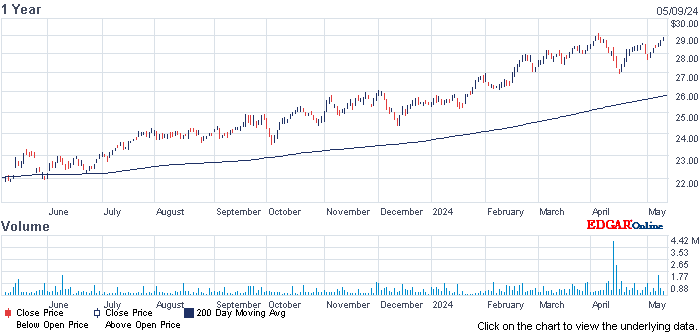
Dow plunged 767 (off session lows), decliners over advancers about 10-1 & NAZ tumbled 278. The MLP index sank 6+ to the 235s (lowest in more than a decade) & the REIT index remained down 7 to the 383s. Junk bond funds dropped in price & Treasuries skyrocketed in price, with the yield on the 10 year Treasury plunging 12 basis points to 1.73%. Oil dropped 1 to the 54s & gold shot up 17 to 1474.
AMJ (Alerian MLP Index tracking fund)


China halting new agricultural purchases, may slap tariffs on farm goods recently bought: State
Oil futures resumed their drop today, tracking losses ripping thru broader financial markets as concern for a prolonged trade war & its risk to global crude demand was rekindled. Last week, the US oil benchmark suffered its biggest one-day fall in more than 4 years & ended lower for the week after Pres Trump moved to impose additional import tariffs on Chinese goods & China pledged retaliation on other goods. China’s currency weakened below the important level of 7 yuan to the $, sparking a global selloff in equities & other assets perceived as risky as investors flooded into haven assets, including Treasuries. West Texas Intermediate crude for Sep delivery settled down 97¢ (1.7%) to $54.69 a barrel. Fri's rebound recovered a portion of the 7.9% drop from Thurs. But the front-month contract still suffered a 1% weekly loss last week as WTI’s drop on Thurs marked the biggest percentage fall for a front-month contract since Feb 4, 2015 & the settlement at $53.95 that day was the lowest since Jun 19. WTI remains off 17% from its 2019 settle high of $66.30 hit Apr 23. Global benchmark Oct Brent crude settled at $59.81 a barrel on ICE, down slightly on the day. With its loss fattened by Thurs's 7% slide, the contract ended 2.3% lower for last week.
The US service sector expanded at the slowest pace in nearly 3 years in Jul, a sign that a key segment of the economy continues to cool. The Institute for Supply Management's nonmanufacturing purchasing managers index eased for the 2nd month in a row to 53.7 in Jul from 55.1 in Jun, below expectations for a higher reading of 55.7. The Jul reading was the index’s lowest level since Aug 2016.
Pres Trump accused China of manipulating its currency as the trade war between the 2 economies keeps escalating. “China dropped the price of their currency to an almost a historic low,” Trump tweeted. “It’s called ‘currency manipulation.’ Are you listening Federal Reserve? This is a major violation which will greatly weaken China over time!” China — which has historically controlled its currency — allowed the yuan to fall to its lowest level in more than a decade. The yuan traded above 7 per $, making Chinese products cheaper. The People’s Bank of China denied devaluing the yuan as a counter to US tariffs. PBOC Governor Yi Gang said China will “not engage in competitive devaluation, and not use the exchange rate for competitive purposes and not use the exchange rate as a tool to deal with external disturbances such as trade disputes.” Trump’s comments came less than 3 months after his administration decided not to label China a currency manipulator. No country has been named a manipulator since the Clinton administration did so for China in 1994. Though Trump vowed to brand China a manipulator during his campaign, his administration has passed on 5 opportunities to do so. Trump's tweet came 4 days after he announced a 10% tariff on the remaining $300B in Chinese imports that had eluded US levies. The additional tariff is set to take effect on Sep 1, when Chinese officials are scheduled to meet with their US counterparts in DC. Trump said last week that China was supposed to buy “large quantities” of US agricultural products, but did not do so. China had reportedly denied Trump’s claims.
Trump accuses China of ‘currency manipulation’ as yuan drops to lowest level in more than a decade
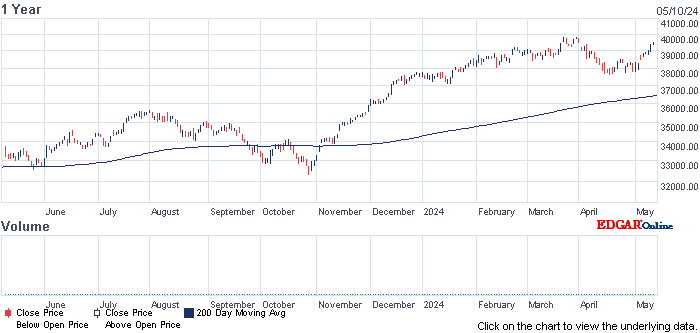
This was one ugly day that will not be forgotten for some time. Sellers began in earnest at the opening & kept up that pressure throughout the day. In the last hour, bargain hunters returned & trimmed the Dow's loss to "only" 767 & there was profit taking in gold after its rise. Analysis in all the confusion means little. Traders are waiting to see what tomorrow brings. For investors, try to get a good night's sleep.
Dow Jones Industrials


AMJ (Alerian MLP Index tracking fund)


China said that it could slap tariffs on US agricultural products that it bought recently, state-run media Xinhua said. “The Customs Tariff Commission of the State Council has not ruled out
import tariffs on newly purchased US agricultural products after August
3, and Chinese related companies have suspended purchasing US
agricultural products,” Xinhua said. This is China’s newest threat in retaliation against Pres Trumps's
10% tariffs on $300B worth of Chinese goods announced last week.
China has allowed its yuan to break thru 7 against the $ for
the first time since 2008. “The relevant Chinese authorities
indicated that China has a large market capacity and a bright prospect
for importing high-quality agricultural products from the United
States,” Xinhua said. “However, it is hoped that the US will
conscientiously implement the consensus reached at the meeting between
the heads of state of China and the US, and have the confidence to
implement the commitments to create the necessary conditions for
cooperation in the agricultural fields between the two countries,”
Xinhua added. Chinese purchases of US agricultural products
remains a big sticking point in the trade conflict. Trump claimed last
week that China agreed to buy “in large quantities, but did not do so.”
China, however, had insisted Ms of tons of US soybeans have
been shipped to China since Jul 19.
China halting new agricultural purchases, may slap tariffs on farm goods recently bought: State
Oil futures resumed their drop today, tracking losses ripping thru broader financial markets as concern for a prolonged trade war & its risk to global crude demand was rekindled. Last week, the US oil benchmark suffered its biggest one-day fall in more than 4 years & ended lower for the week after Pres Trump moved to impose additional import tariffs on Chinese goods & China pledged retaliation on other goods. China’s currency weakened below the important level of 7 yuan to the $, sparking a global selloff in equities & other assets perceived as risky as investors flooded into haven assets, including Treasuries. West Texas Intermediate crude for Sep delivery settled down 97¢ (1.7%) to $54.69 a barrel. Fri's rebound recovered a portion of the 7.9% drop from Thurs. But the front-month contract still suffered a 1% weekly loss last week as WTI’s drop on Thurs marked the biggest percentage fall for a front-month contract since Feb 4, 2015 & the settlement at $53.95 that day was the lowest since Jun 19. WTI remains off 17% from its 2019 settle high of $66.30 hit Apr 23. Global benchmark Oct Brent crude settled at $59.81 a barrel on ICE, down slightly on the day. With its loss fattened by Thurs's 7% slide, the contract ended 2.3% lower for last week.
Oil resumes steep drop as U.S.-China trade row raises demand worries
The US service sector expanded at the slowest pace in nearly 3 years in Jul, a sign that a key segment of the economy continues to cool. The Institute for Supply Management's nonmanufacturing purchasing managers index eased for the 2nd month in a row to 53.7 in Jul from 55.1 in Jun, below expectations for a higher reading of 55.7. The Jul reading was the index’s lowest level since Aug 2016.
Services-Sector Growth is Slowest in Three Years
Pres Trump accused China of manipulating its currency as the trade war between the 2 economies keeps escalating. “China dropped the price of their currency to an almost a historic low,” Trump tweeted. “It’s called ‘currency manipulation.’ Are you listening Federal Reserve? This is a major violation which will greatly weaken China over time!” China — which has historically controlled its currency — allowed the yuan to fall to its lowest level in more than a decade. The yuan traded above 7 per $, making Chinese products cheaper. The People’s Bank of China denied devaluing the yuan as a counter to US tariffs. PBOC Governor Yi Gang said China will “not engage in competitive devaluation, and not use the exchange rate for competitive purposes and not use the exchange rate as a tool to deal with external disturbances such as trade disputes.” Trump’s comments came less than 3 months after his administration decided not to label China a currency manipulator. No country has been named a manipulator since the Clinton administration did so for China in 1994. Though Trump vowed to brand China a manipulator during his campaign, his administration has passed on 5 opportunities to do so. Trump's tweet came 4 days after he announced a 10% tariff on the remaining $300B in Chinese imports that had eluded US levies. The additional tariff is set to take effect on Sep 1, when Chinese officials are scheduled to meet with their US counterparts in DC. Trump said last week that China was supposed to buy “large quantities” of US agricultural products, but did not do so. China had reportedly denied Trump’s claims.
Trump accuses China of ‘currency manipulation’ as yuan drops to lowest level in more than a decade
This was one ugly day that will not be forgotten for some time. Sellers began in earnest at the opening & kept up that pressure throughout the day. In the last hour, bargain hunters returned & trimmed the Dow's loss to "only" 767 & there was profit taking in gold after its rise. Analysis in all the confusion means little. Traders are waiting to see what tomorrow brings. For investors, try to get a good night's sleep.
Dow Jones Industrials