Dow dropped 125, decliners over advancers better than 3-2 & NAZ puled back 22. The MLP index fell 1 to the 227s & the REIT index went up 4+ to the 408s. Junk bond funds slid lower & Treasuries were in very strong demand with the 2 year Treasury yield at its lowest level in 2 years. Oil fell another 1+ to the 51s & gold gained 10 to 1517.
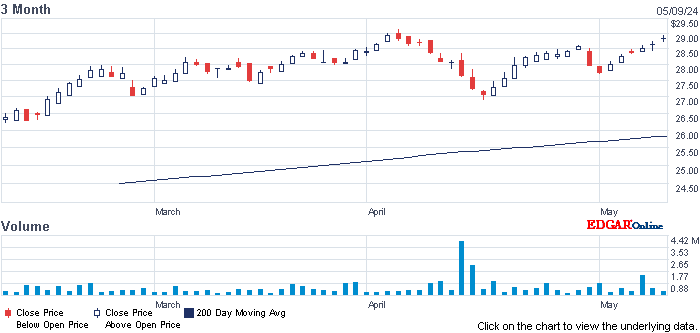
AMJ (Alerian MLP Index tracking fund)


Stocks opened little changed after recession concerns parked selling during the first 2 days of Q4. The S&P 500 index lost 1.8% yesterday after a survey by payroll processor ADP found hiring weakened in Sep. That added to concern about earlier data showing US manufacturing shrank last month by its widest margin in a decade. Those sent markets around the world tumbling. Adding to uncertainty was a World Trade Organization ruling that cleared the US to impose tariffs on up to $7.5B of European goods to compensate for illegal subsidies given to aircraft manufacturer Airbus. The Trump administration said tariffs would begin Oct 18. In Europe, the major averages traded mixed & German markets were closed for a holiday. In Asia, Japan's Nikkei fell 2% & Hong Kong's Hang Seng lost 0.3%. Chinese & Korean markets were closed for a holiday.
The services sector expanded slower than expected in Sep, according to the ISM Non-Manufacturing Index just released. The closely watched metric came in at 52.6. The forecast called for services remaining strong in Sep at 55.3, a healthy expansion rate, but down from Aug's 56.4. Although the number remained above 50, which shows expansion, the pace of growth in the service sector is cooling, another sign the economy is slowing down. Earlier this week, the worst manufacturing reading in more than a decade reignited fears that the US economy is headed towards a recession. The ISM Sep Manufacturing Index fell to 47.8 last month, the 2nd month of contraction.
Peter Navarro, White House assistant for trade & manufacturing policy, says the World Trade Organization’s judgment in favor of the US won’t be the start of a tit-for-tat trade war with Europe. “This was a case that was filed with the World Trade Organization, it went through 15 years, and there was a judgment,” Navarro said. “Under the rules of the WTO, the judgment will be enforced, and there can be no retaliation.” The WTO yesterday ruled the US can impose tariffs on $7.5B worth of EU goods due to Airbus receiving illegal subsidies for more than a decade. The ruling was the biggest reward in WTO history by a factor of 2. Pres Trump celebrated the ruling today. “The U.S. won a $7.5 Billion award from the World Trade Organization against the European Union, who has for many years treated the USA very badly on Trade due to Tariffs, Trade Barriers, and more,” Trump tweeted. “This case going on for years, a nice victory! The tariffs, which are set to go into effect on Oct 18, are expected to be 10% on large commercial aircraft & 25% on agricultural & other industrial goods. European cheese, olives & whiskey are among the goods that will be hit with the tariffs. The E.U. has vowed to retaliate if the US imposed countermeasures. “If the U.S. decides to impose WTO authorized countermeasures, it will be pushing the EU into a situation where we will have no other option than to do the same,” said EU Trade Commissioner Cecilia Malmstrom. Meanwhile, Navarro said the American people should be celebrating this victory. “This is the kind of day where President Trump and ambassador LIghtheizer should be getting high fives and salutes," he said. "They did a great job.”
Holiday retail sales in Nov & Dec — excluding automobiles, gasoline & restaurants — are expected to increase 3.8-4.2% this year, reaching $728- $731B, the National Retail Federation said. The retail trade group cited “uncertainty over trade” as being a potential drag on the season this year, as the US & China are set to resume trade talks later this month. NRF's sales range sits below some other forecasts from retail industry consultants, which are calling for growth of upwards of 5%. The group said holiday retail sales have increased an average of 3.7% over the past 5 years. It's expecting online & other non-store sales in 2019, which are included in its total forecast, to climb 11-14%, amounting to $163-167B. “There has clearly been a slowdown brought on by considerable uncertainty around issues including trade, interest rates, global risk factors and political rhetoric,” NRF CEO Matt Shay said. “Consumers are in good financial shape and retailers expect a strong holiday season. However, confidence could be eroded by continued deterioration of these and other variables.” In 2018, according to NRF, holiday sales climbed just 2.1%, missing expected growth of 4.3-4.8%. A rocky stock market was called out for weighing on consumer spending, particularly among wealthier shoppers. NRF has, meanwhile, been a loud voice for retailers arguing against additional tariffs taking effect. Shay said last month: “This trade war has gone on far too long, and the harmful consequences for American businesses and consumers continue to grow.” The group expects that tariffs will lead to higher consumer prices, which ultimately hurt consumer spending. NRF’s chief economist Jack Kleinhenz said: “There are probably very few precedents for this uncertain macroeconomic environment. ... There are many moving parts and lots of distractions that make predictions difficult.” NRF said a Sep survey found 79% of consumers were concerned about tariffs leading to price hikes & impacting their shopping. NRF is also calling for retailers to hire 530-590K seasonal workers this year, compared with 554K in 2018.
Retail trade group sees holiday sales rising 3.8% to 4.2% this year, citing ‘uncertainty over trade’
Stocks are being sold & that money is going into safe haven gold & Treasuries. Economic data & forecasts are coming in mediocre to gloomy. Tomorrow the big jobs number for Sep is likely to be unexciting. Risky investments (i.e. stocks) are out for favor by investors.
Dow Jones Industrials


AMJ (Alerian MLP Index tracking fund)
| CL=F | Crude Oil | 51.77 | -0.87 | -1.7% |
| GC=F | Gold | 1,507.90 | 0.00 | 0.0% |


Stocks opened little changed after recession concerns parked selling during the first 2 days of Q4. The S&P 500 index lost 1.8% yesterday after a survey by payroll processor ADP found hiring weakened in Sep. That added to concern about earlier data showing US manufacturing shrank last month by its widest margin in a decade. Those sent markets around the world tumbling. Adding to uncertainty was a World Trade Organization ruling that cleared the US to impose tariffs on up to $7.5B of European goods to compensate for illegal subsidies given to aircraft manufacturer Airbus. The Trump administration said tariffs would begin Oct 18. In Europe, the major averages traded mixed & German markets were closed for a holiday. In Asia, Japan's Nikkei fell 2% & Hong Kong's Hang Seng lost 0.3%. Chinese & Korean markets were closed for a holiday.
US stocks open still down from a hammering on Wednesday
The services sector expanded slower than expected in Sep, according to the ISM Non-Manufacturing Index just released. The closely watched metric came in at 52.6. The forecast called for services remaining strong in Sep at 55.3, a healthy expansion rate, but down from Aug's 56.4. Although the number remained above 50, which shows expansion, the pace of growth in the service sector is cooling, another sign the economy is slowing down. Earlier this week, the worst manufacturing reading in more than a decade reignited fears that the US economy is headed towards a recession. The ISM Sep Manufacturing Index fell to 47.8 last month, the 2nd month of contraction.
Disappointing services economy reading reignites fears of economic slowdown
Peter Navarro, White House assistant for trade & manufacturing policy, says the World Trade Organization’s judgment in favor of the US won’t be the start of a tit-for-tat trade war with Europe. “This was a case that was filed with the World Trade Organization, it went through 15 years, and there was a judgment,” Navarro said. “Under the rules of the WTO, the judgment will be enforced, and there can be no retaliation.” The WTO yesterday ruled the US can impose tariffs on $7.5B worth of EU goods due to Airbus receiving illegal subsidies for more than a decade. The ruling was the biggest reward in WTO history by a factor of 2. Pres Trump celebrated the ruling today. “The U.S. won a $7.5 Billion award from the World Trade Organization against the European Union, who has for many years treated the USA very badly on Trade due to Tariffs, Trade Barriers, and more,” Trump tweeted. “This case going on for years, a nice victory! The tariffs, which are set to go into effect on Oct 18, are expected to be 10% on large commercial aircraft & 25% on agricultural & other industrial goods. European cheese, olives & whiskey are among the goods that will be hit with the tariffs. The E.U. has vowed to retaliate if the US imposed countermeasures. “If the U.S. decides to impose WTO authorized countermeasures, it will be pushing the EU into a situation where we will have no other option than to do the same,” said EU Trade Commissioner Cecilia Malmstrom. Meanwhile, Navarro said the American people should be celebrating this victory. “This is the kind of day where President Trump and ambassador LIghtheizer should be getting high fives and salutes," he said. "They did a great job.”
Peter Navarro on why new tariffs won't lead to trade war with Europe
Holiday retail sales in Nov & Dec — excluding automobiles, gasoline & restaurants — are expected to increase 3.8-4.2% this year, reaching $728- $731B, the National Retail Federation said. The retail trade group cited “uncertainty over trade” as being a potential drag on the season this year, as the US & China are set to resume trade talks later this month. NRF's sales range sits below some other forecasts from retail industry consultants, which are calling for growth of upwards of 5%. The group said holiday retail sales have increased an average of 3.7% over the past 5 years. It's expecting online & other non-store sales in 2019, which are included in its total forecast, to climb 11-14%, amounting to $163-167B. “There has clearly been a slowdown brought on by considerable uncertainty around issues including trade, interest rates, global risk factors and political rhetoric,” NRF CEO Matt Shay said. “Consumers are in good financial shape and retailers expect a strong holiday season. However, confidence could be eroded by continued deterioration of these and other variables.” In 2018, according to NRF, holiday sales climbed just 2.1%, missing expected growth of 4.3-4.8%. A rocky stock market was called out for weighing on consumer spending, particularly among wealthier shoppers. NRF has, meanwhile, been a loud voice for retailers arguing against additional tariffs taking effect. Shay said last month: “This trade war has gone on far too long, and the harmful consequences for American businesses and consumers continue to grow.” The group expects that tariffs will lead to higher consumer prices, which ultimately hurt consumer spending. NRF’s chief economist Jack Kleinhenz said: “There are probably very few precedents for this uncertain macroeconomic environment. ... There are many moving parts and lots of distractions that make predictions difficult.” NRF said a Sep survey found 79% of consumers were concerned about tariffs leading to price hikes & impacting their shopping. NRF is also calling for retailers to hire 530-590K seasonal workers this year, compared with 554K in 2018.
Retail trade group sees holiday sales rising 3.8% to 4.2% this year, citing ‘uncertainty over trade’
Stocks are being sold & that money is going into safe haven gold & Treasuries. Economic data & forecasts are coming in mediocre to gloomy. Tomorrow the big jobs number for Sep is likely to be unexciting. Risky investments (i.e. stocks) are out for favor by investors.
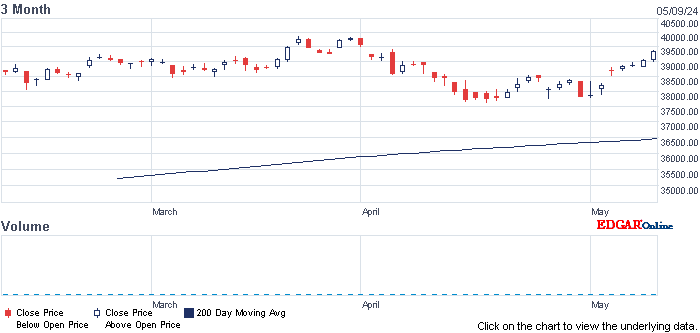
Dow Jones Industrials