


Dow sank 1525, 98% of all stocks were lower & NAZ tumbled 475. The MLP index tumbled 26 to 129 & the REIT index sank 21 to the 375s. Junk bond funds were heavily sold & Treasuries plunged in price, taking the yield on the 10 year Treasury down a staggering 17 basis points to 0.54% (a mind boggling record low). Oil plunged 7+ to the 34s amid all the chaos in the oil markets & gold was steady at 1672.
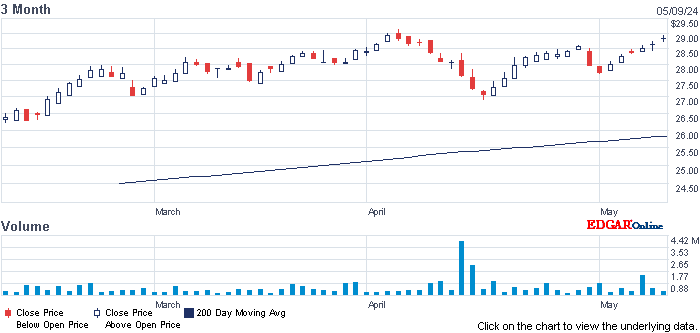
AMJ (Alerian MLP Index tracking fund)


Equities were sharply lower after an oil price war broke out between Saudi Arabia & Russia & the new coronavirus showed signs of spreading. The Dow was down over 2K (7.9%) in the opening minutes of trading while the S&P 500 & NAZ were lower more than 7.4%. Trading, which was already halted for 15 minutes, will see another stoppage if the S&P 500 trades down 13%. The steep slide has caused the NY Federal Reserve to increase its daily cash injections into the banking system to $150B from $100B. The stock-market selloff comes after a production dispute between OPEC members, led by Saudi Arabia, & Russia sent West Texas Intermediate crude oil, the US benchmark, plunging 34%, the most since the outbreak of the 1991 Persian Gulf War, to a low of $27.34 a barrel in overnight trading. After a small rebound, WTI was trading down 21% at $32.42 a barrel. Treasuries were the beneficiary of the flight to safety with heavy buying pushing longer-dated yields lower by more than 30 basis points. Overnight, the benchmark 10-year yield fell to a record low of 0.38% before bouncing to 0.433%. Likewise, the 30-year yield plunged below 1% & was down 37 basis points at 0.854%, another new record low. The drop in Treasury yields accompanies expectations the Federal Reserve will cut rates by 100 basis points at its Mar 18 meeting, lowering its key interest rate to 0-25 basis points. Elsewhere, in global stock markets, France's index was lower by 8% while Germany's DAX & Britain's FTSE were also off 8%. Overnight, Japan's Nikkei paced the decline in Asia after the country's gov lowered its Q4 GDP to an annualized drop of 7.1%, down from 6.3%. Taking inflation into account, the drop was 1.8% on a seasonally adjusted quarterly basis. Meanwhile, China's trade surplus swung to a $7.1B deficit – the first since Mar 2018 – in the first 2 months of the year. China’s Shanghai Composite fell 3% & Hong Kong's Hang Seng shed 4.2%.
Oil prices crashed yesterday evening after Saudi Arabia launched a price war against Russia following the Kremlin's decision not to agree to production cuts, sending a shot across the bow of US shale producers. Brent crude oil, the intl benchmark, plunged 31% to a low of $31.25 a barrel, its steepest single-day drop since the start of the 1991 Persian Gulf War. The energy component has recouped a portion of its losses & was trading around $35.50 a barrel early today. The price war began after Russia on Fri rejected a proposal from OPEC leaders that would have cut production by an additional 1.5M barrels per day, instead calling for the current deal to be extended until the Jun meeting. The OPEC+ group, which Putin helped craft in 2016, has already cut output by 1.7M bpd since Jan 2017. As a result, Saudi Arabia cut the price it charges for crude oil by $6-$8 per barrel & is expected to ramp up production to as high as 12M bpd day, up from 9.7M bpd in Jan. While a deal could still be reached, as of now OPEC+ members will be able to produce as much oil as they want, beginning on Apr 1. That's expected to put further pressure on prices, which had already been under pressure as the market has been dealing with a supply glut that has been worsening due to the new coronavirus outbreak. Russia's move looks to be a calculated one – both a response to US sanctions & designed to target the US shale industry, which is currently under significant financial distress.
‘Circuit breaker’ is triggered to keep stocks from falling through the floor. What you need to know
The NY Federal Reserve said it will increase the amount of money it is offering to banks for their short-term funding needs. As part of its continuing efforts to make sure the funding, or repo, markets are working properly, the central bank said it will up the amount it offers in overnight operations from $100B to $150B thru Thurs. In addition, it will increase the 2-week repo operation offerings from at least $20B to at least $45B. Repo operations involve banks posting high-quality collateral like Treasuries in exchange for operating cash. The moves come amid market tumult that has seen Treasury yields hit record lows amid cascading oil prices & a falling stock market. In its announcement, the Fed said the move is “intended to ensure that the supply of reserves remains ample and to mitigate the risk of money market pressures that could adversely affect policy implementation.” The measure was met with immediate skepticism.
Fed to step up cash injections for banks to guard against market pressure
With so much chaos in the financial markets today, it's difficult to understand what is going on. The confusion can be summarized by the word "chaos." For example: Exxon Mobil (XOM), a Dow stock & Dividend Aristocratic, with a 37 year record of raising annual divs, yields 8%. That's because there is so much risk in the div. All investors can do today is pray.
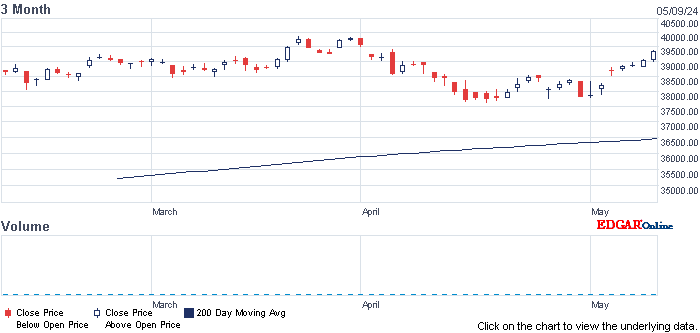
Dow Jones Industrials


AMJ (Alerian MLP Index tracking fund)
| CL=F | Crude Oil | 33.32 | -7.96 | -19.3% |
| GC=F | Gold | 1,670.20 | -2.20 | -0.1% |


Equities were sharply lower after an oil price war broke out between Saudi Arabia & Russia & the new coronavirus showed signs of spreading. The Dow was down over 2K (7.9%) in the opening minutes of trading while the S&P 500 & NAZ were lower more than 7.4%. Trading, which was already halted for 15 minutes, will see another stoppage if the S&P 500 trades down 13%. The steep slide has caused the NY Federal Reserve to increase its daily cash injections into the banking system to $150B from $100B. The stock-market selloff comes after a production dispute between OPEC members, led by Saudi Arabia, & Russia sent West Texas Intermediate crude oil, the US benchmark, plunging 34%, the most since the outbreak of the 1991 Persian Gulf War, to a low of $27.34 a barrel in overnight trading. After a small rebound, WTI was trading down 21% at $32.42 a barrel. Treasuries were the beneficiary of the flight to safety with heavy buying pushing longer-dated yields lower by more than 30 basis points. Overnight, the benchmark 10-year yield fell to a record low of 0.38% before bouncing to 0.433%. Likewise, the 30-year yield plunged below 1% & was down 37 basis points at 0.854%, another new record low. The drop in Treasury yields accompanies expectations the Federal Reserve will cut rates by 100 basis points at its Mar 18 meeting, lowering its key interest rate to 0-25 basis points. Elsewhere, in global stock markets, France's index was lower by 8% while Germany's DAX & Britain's FTSE were also off 8%. Overnight, Japan's Nikkei paced the decline in Asia after the country's gov lowered its Q4 GDP to an annualized drop of 7.1%, down from 6.3%. Taking inflation into account, the drop was 1.8% on a seasonally adjusted quarterly basis. Meanwhile, China's trade surplus swung to a $7.1B deficit – the first since Mar 2018 – in the first 2 months of the year. China’s Shanghai Composite fell 3% & Hong Kong's Hang Seng shed 4.2%.
Dow plunges 2,000+ points, trading reopens after S&P sinks, oil blasted
Oil prices crashed yesterday evening after Saudi Arabia launched a price war against Russia following the Kremlin's decision not to agree to production cuts, sending a shot across the bow of US shale producers. Brent crude oil, the intl benchmark, plunged 31% to a low of $31.25 a barrel, its steepest single-day drop since the start of the 1991 Persian Gulf War. The energy component has recouped a portion of its losses & was trading around $35.50 a barrel early today. The price war began after Russia on Fri rejected a proposal from OPEC leaders that would have cut production by an additional 1.5M barrels per day, instead calling for the current deal to be extended until the Jun meeting. The OPEC+ group, which Putin helped craft in 2016, has already cut output by 1.7M bpd since Jan 2017. As a result, Saudi Arabia cut the price it charges for crude oil by $6-$8 per barrel & is expected to ramp up production to as high as 12M bpd day, up from 9.7M bpd in Jan. While a deal could still be reached, as of now OPEC+ members will be able to produce as much oil as they want, beginning on Apr 1. That's expected to put further pressure on prices, which had already been under pressure as the market has been dealing with a supply glut that has been worsening due to the new coronavirus outbreak. Russia's move looks to be a calculated one – both a response to US sanctions & designed to target the US shale industry, which is currently under significant financial distress.
OIL TANKER: Prices crash amid Saudi-Russia price war, Putin targets US shale
The S&P 500 fell more than 7% this AM, triggering circuit breakers that temporarily helped halt a further plunge. The index hit "limit down" shortly after the open,
halting trading below that level for 15 minutes. The market resumed
trading at 9:49AM & continued a decline that saw the Dow shed more than 2K. In
addition to the S&P, the most all-encompassing large-cap stock
index, the Dow tumbled 7.3% while the NAZ, which is concentrated in
technology names, slid 6.9% before trading stopped. However, about
10 minutes after trading resumed, the major indices shaved their losses
though they remained down steeply for the session & were approaching
bear market conditions. "The market circuit breakers are designed
to slow trading down for a few minutes, give investors the ability to
understand what's happening in the market, consume the information and
make decisions based on market conditions," NY Stock Exchange
Pres Stacey Cunningham said. "This is operating
as it's supposed to." A market trading halt may occur at "three circuit breaker thresholds"
on the S&P 500 due to large declines and volatility. The exchange
classifies this at three levels based on the preceding session's close
in the S&P 500.
‘Circuit breaker’ is triggered to keep stocks from falling through the floor. What you need to know
The NY Federal Reserve said it will increase the amount of money it is offering to banks for their short-term funding needs. As part of its continuing efforts to make sure the funding, or repo, markets are working properly, the central bank said it will up the amount it offers in overnight operations from $100B to $150B thru Thurs. In addition, it will increase the 2-week repo operation offerings from at least $20B to at least $45B. Repo operations involve banks posting high-quality collateral like Treasuries in exchange for operating cash. The moves come amid market tumult that has seen Treasury yields hit record lows amid cascading oil prices & a falling stock market. In its announcement, the Fed said the move is “intended to ensure that the supply of reserves remains ample and to mitigate the risk of money market pressures that could adversely affect policy implementation.” The measure was met with immediate skepticism.
Fed to step up cash injections for banks to guard against market pressure
With so much chaos in the financial markets today, it's difficult to understand what is going on. The confusion can be summarized by the word "chaos." For example: Exxon Mobil (XOM), a Dow stock & Dividend Aristocratic, with a 37 year record of raising annual divs, yields 8%. That's because there is so much risk in the div. All investors can do today is pray.
Dow Jones Industrials


