


Dow rose 9, advancers barely ahead of decliners & NAZ inched up 3. The MLP index was flattish in the 265s. Junk bond funds crawled higher & Treasuries fluctuated. Oil slid lower in the 63s & gold dropped 7 to 1325.
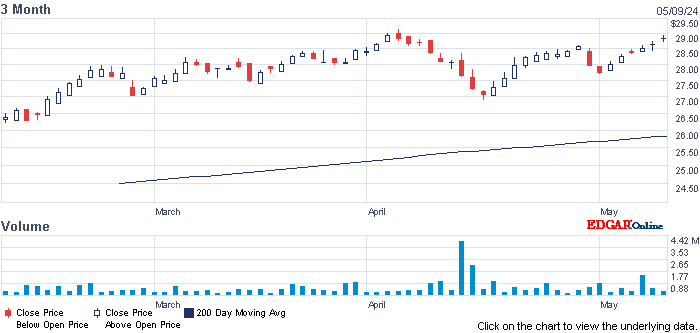
AMJ (Alerian MLP Index tracking fund)


Federal Reserve Chairman Jerome Powell said the central bank can continue gradually raising interest rates as the outlook for growth remains strong & the recent bout of financial volatility shouldn't weigh on the US economy. “Some of the headwinds the U.S. economy faced in previous years have turned into tailwinds,” Powell said to the House Financial Services Committee. “Fiscal policy has become more stimulative and foreign demand for U.S. exports is on a firmer trajectory.’’ Powell takes over the rate-setting FOMC at a time when the world's largest economy may be shifting gear to faster growth, somewhat higher inflation & declining unemployment. Adding to the momentum are tax cuts & spending increases agreed to by Rep lawmakers. “In gauging the appropriate path for monetary policy over the next few years, the FOMC will continue to strike a balance between avoiding an overheated economy and bringing PCE price inflation to 2 percent on a sustained basis,’’ he said. The recent correction in the stock market & rising rates on gov debt shouldn't hamper growth, he added. US central bankers predicted they would increase the benchmark lending rate 3 times this year & investors widely expect the central bank will act at its policy meeting next month. Faster growth may test that gradual pace after years of modest economic performance. A brightening economic outlook & the possibility that could prod the Fed to raise rates at a faster pace, have prompted a reaction in financial markets also adjusting to the prospects of stepped-up US gov debt issuance to fund a widening budget deficit. Yields on gov 10-year notes fell slightly to 2.85% after orders for business equipment at US factories unexpectedly declined. The S&P 500 Index opened little changed.
Powell Sees Gradual Hikes Amid Strong U.S. Growth Outlook
Orders for business equipment at US factories unexpectedly fell for a 2nd month, a sign that demand is cooling from its hot pace in recent qtrs, a Commerce Dept report showed. Non-military capital goods orders excluding aircraft declined 0.2% (est up 0.5%) after falling 0.6% the prior month. Shipments of those goods, which are used to calculate GDP, rose 0.1% (est up 0.3%) after an upwardly revised 0.7% increase. Bookings for all durable goods, items meant to last at least 3 years, dropped 3.7% (est 2% decline) following a downwardly revised 2.6% increase. Excluding transportation-equipment demand, which is volatile, orders fell 0.3% (est up 0.4%) after rising 0.7%. The figures represented the first back-to-back drops in orders for business equipment since Apr-May 2016. The latest data included a 0.4% decline in orders for machinery & a 0.8% drop in bookings for electrical equipment, appliances & components. Total durable-goods demand last month was dragged down by bookings for commercial aircraft, which fell 28.4% in Jan after advancing 16.1% a month earlier. Even with the decline, capital investment is likely to be supported in 2018 by the tax legislation signed in Dec. The law generally reduces taxes for businesses & individuals, with the Trump administration & lawmakers hoping the effects show in corp & consumer spending. Business-equipment investment in the US rose at an 11.4% annualized rate Q4, the fastest in 3 years. Today's figures may partly reflect harsh weather in some parts of the US.
Euro-area economic confidence slipped in Feb, the latest number to show momentum in in the region is taking a breather after the best year in a decade. The European Commission index of sentiment fell to 114.1 from 114.9, broadly in line with expectations. That's the 2nd consecutive monthly decline after the index touched a 17-year high in Dec. The business climate measure also declined, falling to the lowest since Oct. The report continues a run of disappointing numbers from the 19-nation currency bloc. Business confidence in Germany fell the most in more than 5 years in Feb, while the euro-region Purchasing Managers Indices showed manufacturing & services activity weakened more than forecast. The commission report showed that economic sentiment declined in Germany, France & Spain, though it rose in Italy, suggesting the election this weekend hasn't put a damper on confidence. With most eurozone indicators still at high levels, ECB Pres Mario Draghi is maintaining an upbeat view, telling European lawmakers that the economy is expanding robustly. Expansion of 2.3% is forecast for this year, not far from the 2.5% pace reached in 2017 & strong global growth is boosting demand. For the ECB, the key question is how this feeds thru to inflation, which remains below the bank's goal of just below 2%. Inflation in Germany probably slowed this month & data tomorrow is forecast to show the euro-region rate fell to just 1.2%. Draghi has underscored that the upswing is still heavily dependent on monetary support. While policy makers are debating how to chart their exit from their quantitative-easing program & record-low interest rates, they opted against adjusting forward guidance at their Jan meeting, agreeing instead that the stance remained “broadly appropriate.”
Euro-Area Economic Confidence Declines for a Second Month
The overbought stock market has a lot to digest. Since depressed levels in early Feb, the Dow has risen about 1.4K in just 3 weeks. While panic selling is over, fears about interest rate hikes, which are all but certain, have not gone away. Investor & traders have become used to low interest rates & will continue to have difficulty adjusting to higher rates. Meanwhile the economy is doing well & tax cuts for workers should extend this strength.
Dow Jones Industrials
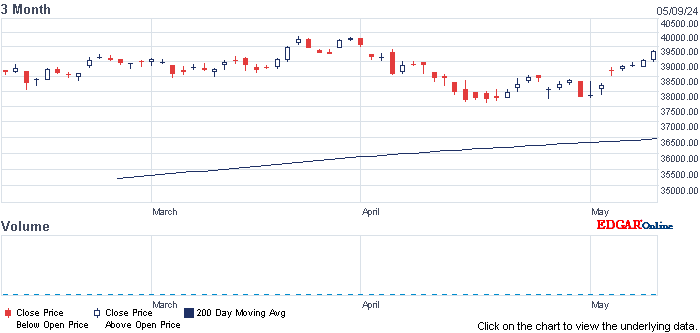


AMJ (Alerian MLP Index tracking fund)
| CL=F | Crude Oil | 63.75 | -0.16 | -0.3% |
| GC=F | Gold | 1,327.90 | -4.90 | -0.4% |


Federal Reserve Chairman Jerome Powell said the central bank can continue gradually raising interest rates as the outlook for growth remains strong & the recent bout of financial volatility shouldn't weigh on the US economy. “Some of the headwinds the U.S. economy faced in previous years have turned into tailwinds,” Powell said to the House Financial Services Committee. “Fiscal policy has become more stimulative and foreign demand for U.S. exports is on a firmer trajectory.’’ Powell takes over the rate-setting FOMC at a time when the world's largest economy may be shifting gear to faster growth, somewhat higher inflation & declining unemployment. Adding to the momentum are tax cuts & spending increases agreed to by Rep lawmakers. “In gauging the appropriate path for monetary policy over the next few years, the FOMC will continue to strike a balance between avoiding an overheated economy and bringing PCE price inflation to 2 percent on a sustained basis,’’ he said. The recent correction in the stock market & rising rates on gov debt shouldn't hamper growth, he added. US central bankers predicted they would increase the benchmark lending rate 3 times this year & investors widely expect the central bank will act at its policy meeting next month. Faster growth may test that gradual pace after years of modest economic performance. A brightening economic outlook & the possibility that could prod the Fed to raise rates at a faster pace, have prompted a reaction in financial markets also adjusting to the prospects of stepped-up US gov debt issuance to fund a widening budget deficit. Yields on gov 10-year notes fell slightly to 2.85% after orders for business equipment at US factories unexpectedly declined. The S&P 500 Index opened little changed.
Powell Sees Gradual Hikes Amid Strong U.S. Growth Outlook
Orders for business equipment at US factories unexpectedly fell for a 2nd month, a sign that demand is cooling from its hot pace in recent qtrs, a Commerce Dept report showed. Non-military capital goods orders excluding aircraft declined 0.2% (est up 0.5%) after falling 0.6% the prior month. Shipments of those goods, which are used to calculate GDP, rose 0.1% (est up 0.3%) after an upwardly revised 0.7% increase. Bookings for all durable goods, items meant to last at least 3 years, dropped 3.7% (est 2% decline) following a downwardly revised 2.6% increase. Excluding transportation-equipment demand, which is volatile, orders fell 0.3% (est up 0.4%) after rising 0.7%. The figures represented the first back-to-back drops in orders for business equipment since Apr-May 2016. The latest data included a 0.4% decline in orders for machinery & a 0.8% drop in bookings for electrical equipment, appliances & components. Total durable-goods demand last month was dragged down by bookings for commercial aircraft, which fell 28.4% in Jan after advancing 16.1% a month earlier. Even with the decline, capital investment is likely to be supported in 2018 by the tax legislation signed in Dec. The law generally reduces taxes for businesses & individuals, with the Trump administration & lawmakers hoping the effects show in corp & consumer spending. Business-equipment investment in the US rose at an 11.4% annualized rate Q4, the fastest in 3 years. Today's figures may partly reflect harsh weather in some parts of the US.
Orders for U.S. Business Equipment Unexpectedly Fell in January
Euro-area economic confidence slipped in Feb, the latest number to show momentum in in the region is taking a breather after the best year in a decade. The European Commission index of sentiment fell to 114.1 from 114.9, broadly in line with expectations. That's the 2nd consecutive monthly decline after the index touched a 17-year high in Dec. The business climate measure also declined, falling to the lowest since Oct. The report continues a run of disappointing numbers from the 19-nation currency bloc. Business confidence in Germany fell the most in more than 5 years in Feb, while the euro-region Purchasing Managers Indices showed manufacturing & services activity weakened more than forecast. The commission report showed that economic sentiment declined in Germany, France & Spain, though it rose in Italy, suggesting the election this weekend hasn't put a damper on confidence. With most eurozone indicators still at high levels, ECB Pres Mario Draghi is maintaining an upbeat view, telling European lawmakers that the economy is expanding robustly. Expansion of 2.3% is forecast for this year, not far from the 2.5% pace reached in 2017 & strong global growth is boosting demand. For the ECB, the key question is how this feeds thru to inflation, which remains below the bank's goal of just below 2%. Inflation in Germany probably slowed this month & data tomorrow is forecast to show the euro-region rate fell to just 1.2%. Draghi has underscored that the upswing is still heavily dependent on monetary support. While policy makers are debating how to chart their exit from their quantitative-easing program & record-low interest rates, they opted against adjusting forward guidance at their Jan meeting, agreeing instead that the stance remained “broadly appropriate.”
Euro-Area Economic Confidence Declines for a Second Month
The overbought stock market has a lot to digest. Since depressed levels in early Feb, the Dow has risen about 1.4K in just 3 weeks. While panic selling is over, fears about interest rate hikes, which are all but certain, have not gone away. Investor & traders have become used to low interest rates & will continue to have difficulty adjusting to higher rates. Meanwhile the economy is doing well & tax cuts for workers should extend this strength.
Dow Jones Industrials


![Live 24 hours gold chart [Kitco Inc.]](https://lh3.googleusercontent.com/blogger_img_proxy/AEn0k_ugbWwo2erWgVsMg1K1_WzURHJUnk0sJ5v71iVqRerPNOMl6rIVBxVu7V3aNndoG1v3Dt9EFTMIYxRtz6UEGC1BFe2ixCAtkWCXDvP7fGk-2VxDhFraREHOiAbHcieqABc5=s0-d)


