


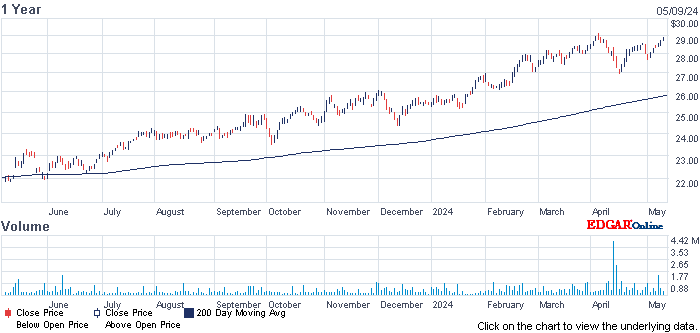
Dow finished down 27, advancers just ahead of decliners & NAZ lost 18. The MLP index gained 2+ to the 347s & the REIT index was up 3+ to the 353s. Junk bond funds fluctuated & Treasuries crawled higher. Oil went up 1 to the 51s & gold was flattish at 1229.
AMJ (Alerian MLP Index tracking fund)


The Trump administration & their counterparts in Beijing are considering a trade agreement under which Pres Trump would withhold levying new tariffs on China, according to leakers. In exchange for holding back on new tariffs thru the spring, China would reconsider some economic policies, which could include intellectual property protections, subsidies to state-owned businesses, opening up its markets & cyber-espionage. Trade officials from both countries are said to have been discussing the arrangement for weeks, though it remains unclear whether both parties would sign on. Trump is expected to meet with Chinese Pres Xi Jinping at the Group of 20 summit in Buenos Aires this weekend. A final decision on the proposed arrangement would reportedly not be decided until then. White House trade adviser Peter Navarro, a trade hawk, is expected to attend a dinner between the pair of world leaders, which some believe could decrease prospects of progress. Earlier this week, Trump said he expected to move forward with a plan that would increase tariff rates on $200B worth of items from China at the beginning of next year. He said it was “highly unlikely” he would refrain from lifting the levy rates to 25& & he also suggested that if talks were unproductive, he would implement tariffs on even more Chinese goods. Today, he urged US companies in a Twitter post to build in the US in order to avoid tariffs because there is “a long way to go.”
Trump reportedly may suspend additional China tariffs under proposed deal
The Trump administration's widening trade war will raise prices for US consumers, but it won't bring back many manufacturing jobs that have moved overseas. That's what more than 800 companies said in a survey conducted by IHS Markit, a London-based economics research firm. When the administration ramped up tariffs in Jul, Pres Trump insisted the higher duties would encourage US manufacturers to bring overseas jobs back home. Instead, more than 4 in 10 companies surveyed said they plan to raise prices to offset the higher cost of production. Just 1 in 10 said they plan to reduce the share of total output produced outside the US. Roughly the same number said the tariffs would encourage them to move more jobs offshore. Trump has touted occasional announcements of US job creation as proof that his strategy is working. Yesterday, he cited a steelmaker's plan to create 600 new jobs. But those gains would be dwarfed by news earlier in the week that General Motors (GM) planned to cut 14K jobs in a widespread restructuring forced in part by fading sales growth. Though the company did not specifically cite Trump administration tariffs, US automakers have been hit hard by the rise in steel prices brought by higher US duties on imported steel. Though many companies have tried to hold the line on price increases, the cost of higher tariffs will eventually be borne by consumers. One recent stury estimated the economic impact of lost wages & higher prices at $2400 per household in 2019. Citing unfair trade practices, Trump imposed 10% tariffs on $200B of Chinese imports in Sep. China retaliated by imposing taxes on $60B worth of US goods. US duties are set to increase to 25% in Jan. Trump has also threatened to impose duties on $267B more of goods if Beijing does not meet his demands. That would expand US tariffs to almost all of China's exports to the US. When Trump first sparked global trade tensions with major US trading partners in Jul, US businesses had hoped the disputes would be resolved quickly. But while the US, Canada & Mexico are set to sign an updated trade deal tomorrow, negotiations with China have shown little progress. Just days ahead of a meeting with Chinese Pres Xi Jinpingi in Argentina, Trump said Mon he expected to move ahead with raising tariffs on $200B in Chinese imports to 25% from the current 10% repeated his threat to slap tariffs on all remaining imports from China. Trump said it was "highly unlikely" he would accept China's request to hold off on the increase, which is due to take effect on Jan 1. "The only deal would be China has to open up their country to competition from the United States," Trump added. "As far as other countries are concerned, that's up to them."
US manufacturers say Trump tariffs will bring higher prices, not more jobs
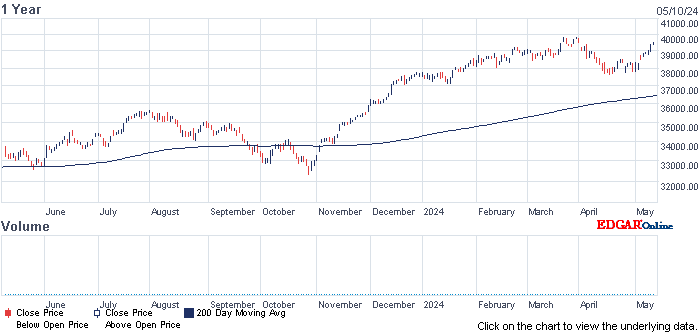
Rising interest rate concerns are fading & more eyes are watching the news on the upcoming G-20 meeting. Both sides are playing hardball with so much at stake. There may be a half-way agreement in which each side gets some of what it wants while giving way of other issues. Not much to do, but wait it out. The Dow has recently rallied back to the middle of where it has been this year (shown below). Today it gave back 100 in the last hour, but that may not mean much.
Dow Jones Industrials


AMJ (Alerian MLP Index tracking fund)


Almost all Federal Reserve officials at their last meeting agreed another interest rates increase was "likely to be warranted fairly soon," but also opened
debate on when to pause further hikes & how to relay those plans to
the public. Minutes of the Nov meeting
show policymakers ticking off a series of issues, including a tightening
of financial conditions, global risks, "and some signs of slowing in
interest-sensitive sectors," that had begun weighing on their view of
the economy. A few participants who agreed
further rate increases were likely to be warranted also "expressed
uncertainty about the timing" as Fed officials discussed how to
communicate a possible change in their approach to future hikes. "Participants
also commented on how the Committee's communications in its
post-meeting statement might need to be revised at coming meetings,
particularly the language referring to the Committee's expectations for
'further gradual increases' in the target range for the federal funds
rates," the minutes said. "Many
participants indicated that it might be appropriate at some upcoming
meetings to begin to transition to statement language that placed
greater emphasis on the evaluation of incoming data in assessing the
economic and policy outlook; such a change would help to convey the
Committee's flexible approach in responding to changing economic
circumstances." The need for "further gradual
rate increases" as appropriate to keep the current recovery on track has
been a staple of recent Fed policy statements as the central bank
nudged rates back toward more normal levels after a decade near zero. Its removal would flag a possible pause in roughly quarterly hikes that
had been expected to continue thru 2019, without committing the
central bank to moving or not moving at any particular meeting. The
possible policy shift occurred at a meeting at which the Fed also
resumed debate on how best to manage short-term interest rates in the
future, a decision that could influence the final target size of
the Fed's still-massive balance sheet. Fed staff
research & a survey of bank execs indicated that the demand for
reserves had changed in the years since the crisis, complicated by new
liquidity & other regulations. Because of the
large amount of reserves in the system, & their now varied uses,
meeting participants "commented on the advantages of a regime of policy
implementation with abundant excess reserves." By contrast they
indicated it might be difficult to return to managing short-term rates
based on a "scarcity" of reserves, the method used before the 2007-2009 financial crisis. The current system relies on the Fed paying
interest on some reserves to set the federal funds rate.
Fed minutes: Further hike 'warranted soon,' debate opened on pause
The Trump administration & their counterparts in Beijing are considering a trade agreement under which Pres Trump would withhold levying new tariffs on China, according to leakers. In exchange for holding back on new tariffs thru the spring, China would reconsider some economic policies, which could include intellectual property protections, subsidies to state-owned businesses, opening up its markets & cyber-espionage. Trade officials from both countries are said to have been discussing the arrangement for weeks, though it remains unclear whether both parties would sign on. Trump is expected to meet with Chinese Pres Xi Jinping at the Group of 20 summit in Buenos Aires this weekend. A final decision on the proposed arrangement would reportedly not be decided until then. White House trade adviser Peter Navarro, a trade hawk, is expected to attend a dinner between the pair of world leaders, which some believe could decrease prospects of progress. Earlier this week, Trump said he expected to move forward with a plan that would increase tariff rates on $200B worth of items from China at the beginning of next year. He said it was “highly unlikely” he would refrain from lifting the levy rates to 25& & he also suggested that if talks were unproductive, he would implement tariffs on even more Chinese goods. Today, he urged US companies in a Twitter post to build in the US in order to avoid tariffs because there is “a long way to go.”
Trump reportedly may suspend additional China tariffs under proposed deal
The Trump administration's widening trade war will raise prices for US consumers, but it won't bring back many manufacturing jobs that have moved overseas. That's what more than 800 companies said in a survey conducted by IHS Markit, a London-based economics research firm. When the administration ramped up tariffs in Jul, Pres Trump insisted the higher duties would encourage US manufacturers to bring overseas jobs back home. Instead, more than 4 in 10 companies surveyed said they plan to raise prices to offset the higher cost of production. Just 1 in 10 said they plan to reduce the share of total output produced outside the US. Roughly the same number said the tariffs would encourage them to move more jobs offshore. Trump has touted occasional announcements of US job creation as proof that his strategy is working. Yesterday, he cited a steelmaker's plan to create 600 new jobs. But those gains would be dwarfed by news earlier in the week that General Motors (GM) planned to cut 14K jobs in a widespread restructuring forced in part by fading sales growth. Though the company did not specifically cite Trump administration tariffs, US automakers have been hit hard by the rise in steel prices brought by higher US duties on imported steel. Though many companies have tried to hold the line on price increases, the cost of higher tariffs will eventually be borne by consumers. One recent stury estimated the economic impact of lost wages & higher prices at $2400 per household in 2019. Citing unfair trade practices, Trump imposed 10% tariffs on $200B of Chinese imports in Sep. China retaliated by imposing taxes on $60B worth of US goods. US duties are set to increase to 25% in Jan. Trump has also threatened to impose duties on $267B more of goods if Beijing does not meet his demands. That would expand US tariffs to almost all of China's exports to the US. When Trump first sparked global trade tensions with major US trading partners in Jul, US businesses had hoped the disputes would be resolved quickly. But while the US, Canada & Mexico are set to sign an updated trade deal tomorrow, negotiations with China have shown little progress. Just days ahead of a meeting with Chinese Pres Xi Jinpingi in Argentina, Trump said Mon he expected to move ahead with raising tariffs on $200B in Chinese imports to 25% from the current 10% repeated his threat to slap tariffs on all remaining imports from China. Trump said it was "highly unlikely" he would accept China's request to hold off on the increase, which is due to take effect on Jan 1. "The only deal would be China has to open up their country to competition from the United States," Trump added. "As far as other countries are concerned, that's up to them."
US manufacturers say Trump tariffs will bring higher prices, not more jobs
Rising interest rate concerns are fading & more eyes are watching the news on the upcoming G-20 meeting. Both sides are playing hardball with so much at stake. There may be a half-way agreement in which each side gets some of what it wants while giving way of other issues. Not much to do, but wait it out. The Dow has recently rallied back to the middle of where it has been this year (shown below). Today it gave back 100 in the last hour, but that may not mean much.
Dow Jones Industrials


