


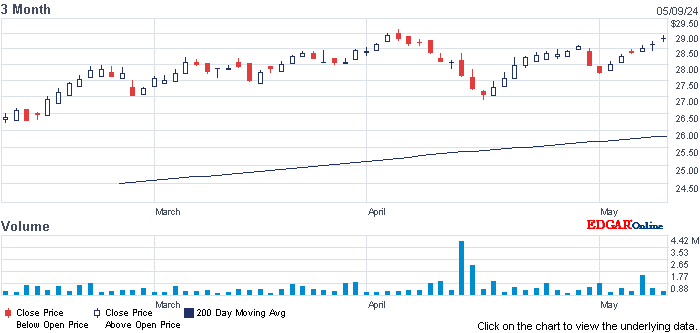
Dow dipped 2, decliners over advancers 4-3 & NAZ was off 6. The MLP index hardly budged in the 218s & the REIT index was fractionally lower to 410 (still near record territory). Junk bond funds were little changed & Treasuries rose in price. Oil fell to the 54s after higher US supplies was reported & gold added 4 to 1495.
AMJ (Alerian MLP Index tracking fund)


The US economy showed more strength than expected in Q3, growing 1.9%, according to an advance reading from the Commerce Dept. The expansion in GDP topped the annualized 1.6% that was expected, though it was still slower than earlier in the year. The US economy grew at a 2% pace in Q2 & by 3.1% at the start of 2019. The waning momentum reflects the 15-month long trade war between the US & China, which has weighed on consumer and business confidence. The performance was driven by consumer & gov spending, residential investment & exports. Personal consumption expenditures expanded at an annualized rate of 2.9% as spending on big -ticket items grew. Still, that was below the 4.6% growth experienced in Q2. Gov spending advanced 2%, while a 3% drop in business investment weighed on overall performance. The slowdown in business investment was the sharpest contraction in more than 3½ years. Also weighing on growth were the 6-week strike at General Motors (GM), which halted production, & the ongoing troubles at Boeing (BA), a Dow stock, that have caused a slowdown in the output of the 737 Max. While this reading was better-than-expected, it was well below the 3% growth that Pres Trump has targeted, which may heighten pressure on his re-election campaign as the 2020 presidential race heats up. The Federal Reserve, meanwhile, will have something to think about when policymakers conclude their 2-day meeting later. Markets are expecting the central bank to cut its fed funds rate by 25 basis points to 1.5-1.75% (the 3rd this year).
Private employers added 125K jobs in Oct, slightly more than expected, according to the latest ADP National Employment Report. The survey called for 120K jobs. Medium-size businesses, which employ 50-499, accounted for almost ½ of the jobs, with 64K created, according to ADP Small businesses (1-49 workers) generated about 17K jobs. Large businesses added 44K positions. “While job growth continues to soften, there are certain segments of the labor market that remain strong,” Ahu Yildirmaz, VP & co-head of the ADP Research Institute, said. Most hiring took place in the services sector, with 138K new jobs created. But the goods-producing sector lost 13K jobs, including 4K in manufacturing. "The job slowdown is most pronounced at manufacturers and small companies," Moody's chief economist Mark Zandi said. "If hiring weakens any further, unemployment will begin to rise." The report also included a sharp downward revision in the Sep numbers. The ADP Research Institute said the private sector added a mere 93K jobs last month, a drop of 31% from the 135K originally reported. The data precedes the release of a more closely watched update from the Labor Dept on Fri, which is expected to show the US economy added 85K jobs in Oct. Analysts anticipate unemployment will edge higher to 3.6%, up from 3.5% in Sep -- a 50-year low. In Sep, the US added a weaker-than-expected 136K positions. ADP's report also precedes a key Federal Reserve announcement in the PM. Policymakers at the central bank are widely expected to cut interest rates by 25 basis points, then hit pause.
Chile said it's calling off the Asia Pacific Economic Cooperation summit in Santiago in mid-Nov. Pres Trump & Chinese leader Xi Jinping were scheduled to meet at the summit to discuss a possible “Phase One” deal that the 2 countries are close to finalizing. The cancellation was due to protests, according to Chile Pres Sebastián Piñera. “This has been a very tough decision … but it is based on the wise principle of common sense,” Piñera said in a media address today. “Our main concern is reestablishing public order, our citizens’ security and social peace along with pushing through a social agenda to respond to the main demands of our citizens.” Chile's gov had extended a state of emergency to several cities across the country last week as a proposed hike in public transport fares sparked nationwide protests. Earlier this month, Trump said the US has come to a “very substantial phase one deal” with China, adding phase 2 will start “almost immediately” after the first phase is signed. The US also ditched a planned tariff hike on $250B in Chinese goods that was set to take effect Oct 15. Trump said the agreement would address issues such as intellectual property & financial services & include a pledge for China to buy $40-50B in American agricultural products. The US said Mon it is considering extending certain tariff exclusions on $34B of imports from China as the 2 work toward a trade agreement. Exemptions on nearly 1000 products are set to expire in Dec.
Chile president cancels APEC summit next month where Trump, Xi were expected to meet
While the Fed decision is weighing on trading, the cancellation of the summit in Chile where Trump & Xi were top sign the first phase of a trade agreement is more important. Economic data today was good enough to be accepted by traders & emotions regarding the Fed announcement later today will fade. But a new location to sign the trade agreement is critical if the bulls want to take the Dow to to new highs. Nervous investors are buying gold today & gold remains strong near recent highs in the mid 1500s.
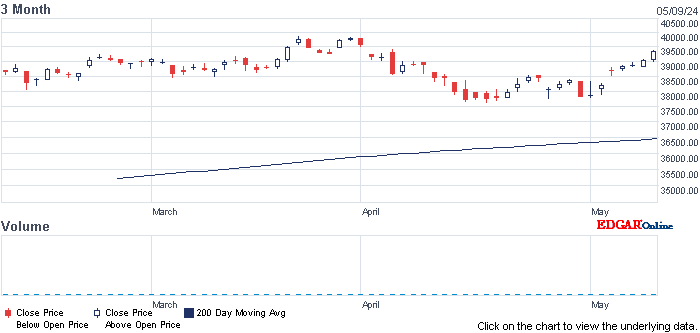
Dow Jones Industrials


AMJ (Alerian MLP Index tracking fund)
| CL=F | Crude Oil | 55.23 | -0.31 | -0.6% |
| GC=F | Gold | 1,495.10 | +4.40 | +0.3% |


The US economy showed more strength than expected in Q3, growing 1.9%, according to an advance reading from the Commerce Dept. The expansion in GDP topped the annualized 1.6% that was expected, though it was still slower than earlier in the year. The US economy grew at a 2% pace in Q2 & by 3.1% at the start of 2019. The waning momentum reflects the 15-month long trade war between the US & China, which has weighed on consumer and business confidence. The performance was driven by consumer & gov spending, residential investment & exports. Personal consumption expenditures expanded at an annualized rate of 2.9% as spending on big -ticket items grew. Still, that was below the 4.6% growth experienced in Q2. Gov spending advanced 2%, while a 3% drop in business investment weighed on overall performance. The slowdown in business investment was the sharpest contraction in more than 3½ years. Also weighing on growth were the 6-week strike at General Motors (GM), which halted production, & the ongoing troubles at Boeing (BA), a Dow stock, that have caused a slowdown in the output of the 737 Max. While this reading was better-than-expected, it was well below the 3% growth that Pres Trump has targeted, which may heighten pressure on his re-election campaign as the 2020 presidential race heats up. The Federal Reserve, meanwhile, will have something to think about when policymakers conclude their 2-day meeting later. Markets are expecting the central bank to cut its fed funds rate by 25 basis points to 1.5-1.75% (the 3rd this year).
US fights off manufacturing woes, posts a win on GDP
Private employers added 125K jobs in Oct, slightly more than expected, according to the latest ADP National Employment Report. The survey called for 120K jobs. Medium-size businesses, which employ 50-499, accounted for almost ½ of the jobs, with 64K created, according to ADP Small businesses (1-49 workers) generated about 17K jobs. Large businesses added 44K positions. “While job growth continues to soften, there are certain segments of the labor market that remain strong,” Ahu Yildirmaz, VP & co-head of the ADP Research Institute, said. Most hiring took place in the services sector, with 138K new jobs created. But the goods-producing sector lost 13K jobs, including 4K in manufacturing. "The job slowdown is most pronounced at manufacturers and small companies," Moody's chief economist Mark Zandi said. "If hiring weakens any further, unemployment will begin to rise." The report also included a sharp downward revision in the Sep numbers. The ADP Research Institute said the private sector added a mere 93K jobs last month, a drop of 31% from the 135K originally reported. The data precedes the release of a more closely watched update from the Labor Dept on Fri, which is expected to show the US economy added 85K jobs in Oct. Analysts anticipate unemployment will edge higher to 3.6%, up from 3.5% in Sep -- a 50-year low. In Sep, the US added a weaker-than-expected 136K positions. ADP's report also precedes a key Federal Reserve announcement in the PM. Policymakers at the central bank are widely expected to cut interest rates by 25 basis points, then hit pause.
Jobs growth continues, looks unstoppable with another beat in October
Chile said it's calling off the Asia Pacific Economic Cooperation summit in Santiago in mid-Nov. Pres Trump & Chinese leader Xi Jinping were scheduled to meet at the summit to discuss a possible “Phase One” deal that the 2 countries are close to finalizing. The cancellation was due to protests, according to Chile Pres Sebastián Piñera. “This has been a very tough decision … but it is based on the wise principle of common sense,” Piñera said in a media address today. “Our main concern is reestablishing public order, our citizens’ security and social peace along with pushing through a social agenda to respond to the main demands of our citizens.” Chile's gov had extended a state of emergency to several cities across the country last week as a proposed hike in public transport fares sparked nationwide protests. Earlier this month, Trump said the US has come to a “very substantial phase one deal” with China, adding phase 2 will start “almost immediately” after the first phase is signed. The US also ditched a planned tariff hike on $250B in Chinese goods that was set to take effect Oct 15. Trump said the agreement would address issues such as intellectual property & financial services & include a pledge for China to buy $40-50B in American agricultural products. The US said Mon it is considering extending certain tariff exclusions on $34B of imports from China as the 2 work toward a trade agreement. Exemptions on nearly 1000 products are set to expire in Dec.
Chile president cancels APEC summit next month where Trump, Xi were expected to meet
While the Fed decision is weighing on trading, the cancellation of the summit in Chile where Trump & Xi were top sign the first phase of a trade agreement is more important. Economic data today was good enough to be accepted by traders & emotions regarding the Fed announcement later today will fade. But a new location to sign the trade agreement is critical if the bulls want to take the Dow to to new highs. Nervous investors are buying gold today & gold remains strong near recent highs in the mid 1500s.
Dow Jones Industrials


![Live 24 hours gold chart [Kitco Inc.]](https://www.kitco.com/images/live/gold.gif?0.2180338269244485)


