


Dow fell 348, decliners over advancers 4-1 & NAZ lost 57. The MLP index fell 4+ to the 127s & the REIT index gave back 3+ to the 358s. Junk bond funds declined along with stocks & Treasuries were purchased, taking the yield on the 10 year Treasury down to 0.54%. Oil dropped to the 39s & gold was sold on profit taking, falling 17 to 1959.
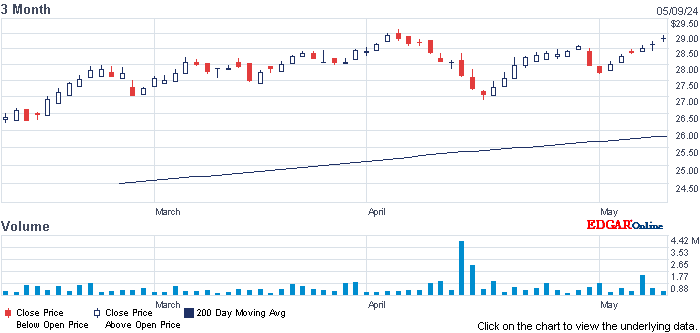
AMJ (Alerian MLP Index tracking fund)


The US economy shrank at a dizzying 33% annual rate in the Apr-Jun qtr — by far the worst plunge ever — when the viral outbreak shut down businesses, throwing 10s of Ms out of work & sending unemployment surging to 14.7%, the gov said. The Commerce Dept's estimate of the Q2 decline in the GDP, the total output of goods & services, marked the sharpest such drop on records dating to 1947. The previous worst quarterly contraction, a 10% drop, occurred in 1958 during the Eisenhower administration. Last qtr's drop followed a 5% fall in the Jan-Mar qtr, during which the economy officially entered a recession triggered by the virus, ending an 11-year economic expansion, the longest on record in the US. The contraction last qtr was driven by a deep pullback in consumer spending, which accounts for about 70% of economic activity. Spending by consumers collapsed at a 34% annual rate as travel all but froze & shutdown orders forced many restaurants, bars, entertainment venues & other retail establishments to close. Business investment & residential housing also suffered sharp declines last qtr. Gov spending, diminished by a loss of tax revenue that forced layoffs, also fell. The job market, the most important pillar of the economy, has been severely damaged. Ms of jobs vanished in the recession. More than 1M laid-off people have applied for unemployment benefits for 18 straight weeks. So far, about 1/3 of the lost jobs have been recovered, but the resurgent virus will likely slow further gains in the job market.
The number of Americans who filed new claims for unemployment benefits last week totaled 1.4M, the Labor Dept reported, roughly in line with expectations, as the coronavirus pandemic continues to ravage the US economy. It was the 19th straight week in which initial claims totaled at least 1M & the 2nd consecutive week in which initial claims rose after declining for 15 straight weeks. The forecast called for claims to rise to 1.45M for the week. Continuing claims — which are composed of those receiving unemployment benefits for at least 2 straight weeks — rose 867K to 17M last week. Initial claims filed in California totaled 249K. In Florida & Georgia, however, they declined from more than 100K to 87K & 85K, respectively. These states are among those that have seen a resurgence in coronavirus cases as state officials ease quarantine & social distancing measures. The latest claims numbers come as lawmakers struggle to push forward on a new coronavirus relief package. Earlier this week, Reps proposed a 2nd round of $1200 stimulus checks. However, White House chief of staff Mark Meadows said that both Dems & Reps are “nowhere close to a deal.”
U.S. weekly jobless claims rise for a second straight week, total 1.434 million
Procter & Gamble (PG), a Dow stock & Dividend Aristocrat, reported strong quarterly revenue growth as consumers stuck at home bought more Tide laundry detergent & Mr Clean products. Even as lockdowns ease & consumers resume past behaviors, the consumer giant expects to see higher demand for its products in fiscal 2021. PG reported fiscal Q4 EPS of $1.07, up from a loss of $2.12 per share, a year earlier. Excluding items, EPS was $1.16, topping the $1.01 expected. Net sales rose 4% to $17.7B, beating expectations of $16.9B. Organic sales, which strip out the impact of currency fluctuations, acquisitions & divestitures, rose 6% during the qtr. The company attributed the growth to higher demand in North America & China, its 2nd-largest market, for its household cleaning & personal health products during the coronavirus crisis. Its fabric & home care segment, which includes Tide & Comet cleaning products, saw organic sales rise 14% in the qtr. “There may be a long term increase focused on home — more time at home, more meals at home — with related consumption impacts,” CEO David Taylor said. Execs said that they expect to see higher demand for those categories in the coming months. Looking to fiscal 2021, the company expects to see challenges continue as the world grapples with the pandemic. “We’ll likely be operating without a vaccine or advanced therapeutics through fiscal ’21,” CFO & COO Jon Moeller said. The stock rose 3.05 in a down market.
If you would like to learn more about PG, click on this link:
club.ino.com/trend/analysis/stock/PG?a_aid=CD3289&a_bid=6ae5b6f7
Procter & Gamble sales rise 4% as consumers buy more cleaning products
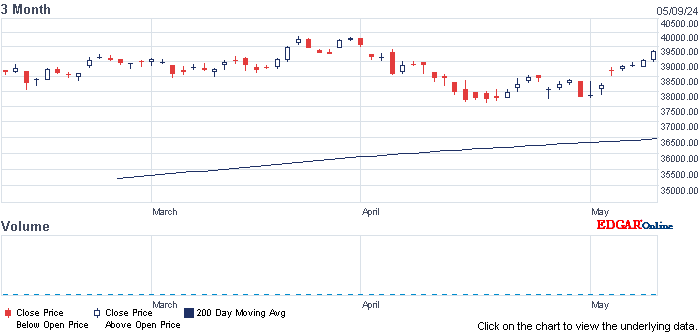
While the economic reports were grim, the data was expected. And the GDP was widely advertised. In a way the jobless claims report was more disturbing because it sends a signal that the recovery is stumbling more than was expected. However work on the new virus vaccine is progressing, giving hope to investors. The Dow continues its sideways trend where it has been for 2 months.
Dow Jones Industrials


AMJ (Alerian MLP Index tracking fund)
| CL=F | Crude Oil | 39.33 | -1.94 | -4.7% |
| GC=F | Gold | 1,970.40 | -6.30 | -0.3% |


The US economy shrank at a dizzying 33% annual rate in the Apr-Jun qtr — by far the worst plunge ever — when the viral outbreak shut down businesses, throwing 10s of Ms out of work & sending unemployment surging to 14.7%, the gov said. The Commerce Dept's estimate of the Q2 decline in the GDP, the total output of goods & services, marked the sharpest such drop on records dating to 1947. The previous worst quarterly contraction, a 10% drop, occurred in 1958 during the Eisenhower administration. Last qtr's drop followed a 5% fall in the Jan-Mar qtr, during which the economy officially entered a recession triggered by the virus, ending an 11-year economic expansion, the longest on record in the US. The contraction last qtr was driven by a deep pullback in consumer spending, which accounts for about 70% of economic activity. Spending by consumers collapsed at a 34% annual rate as travel all but froze & shutdown orders forced many restaurants, bars, entertainment venues & other retail establishments to close. Business investment & residential housing also suffered sharp declines last qtr. Gov spending, diminished by a loss of tax revenue that forced layoffs, also fell. The job market, the most important pillar of the economy, has been severely damaged. Ms of jobs vanished in the recession. More than 1M laid-off people have applied for unemployment benefits for 18 straight weeks. So far, about 1/3 of the lost jobs have been recovered, but the resurgent virus will likely slow further gains in the job market.
GDP plunges in worst decline on record
The number of Americans who filed new claims for unemployment benefits last week totaled 1.4M, the Labor Dept reported, roughly in line with expectations, as the coronavirus pandemic continues to ravage the US economy. It was the 19th straight week in which initial claims totaled at least 1M & the 2nd consecutive week in which initial claims rose after declining for 15 straight weeks. The forecast called for claims to rise to 1.45M for the week. Continuing claims — which are composed of those receiving unemployment benefits for at least 2 straight weeks — rose 867K to 17M last week. Initial claims filed in California totaled 249K. In Florida & Georgia, however, they declined from more than 100K to 87K & 85K, respectively. These states are among those that have seen a resurgence in coronavirus cases as state officials ease quarantine & social distancing measures. The latest claims numbers come as lawmakers struggle to push forward on a new coronavirus relief package. Earlier this week, Reps proposed a 2nd round of $1200 stimulus checks. However, White House chief of staff Mark Meadows said that both Dems & Reps are “nowhere close to a deal.”
U.S. weekly jobless claims rise for a second straight week, total 1.434 million
Procter & Gamble (PG), a Dow stock & Dividend Aristocrat, reported strong quarterly revenue growth as consumers stuck at home bought more Tide laundry detergent & Mr Clean products. Even as lockdowns ease & consumers resume past behaviors, the consumer giant expects to see higher demand for its products in fiscal 2021. PG reported fiscal Q4 EPS of $1.07, up from a loss of $2.12 per share, a year earlier. Excluding items, EPS was $1.16, topping the $1.01 expected. Net sales rose 4% to $17.7B, beating expectations of $16.9B. Organic sales, which strip out the impact of currency fluctuations, acquisitions & divestitures, rose 6% during the qtr. The company attributed the growth to higher demand in North America & China, its 2nd-largest market, for its household cleaning & personal health products during the coronavirus crisis. Its fabric & home care segment, which includes Tide & Comet cleaning products, saw organic sales rise 14% in the qtr. “There may be a long term increase focused on home — more time at home, more meals at home — with related consumption impacts,” CEO David Taylor said. Execs said that they expect to see higher demand for those categories in the coming months. Looking to fiscal 2021, the company expects to see challenges continue as the world grapples with the pandemic. “We’ll likely be operating without a vaccine or advanced therapeutics through fiscal ’21,” CFO & COO Jon Moeller said. The stock rose 3.05 in a down market.
If you would like to learn more about PG, click on this link:
club.ino.com/trend/analysis/stock/PG?a_aid=CD3289&a_bid=6ae5b6f7
Procter & Gamble sales rise 4% as consumers buy more cleaning products
While the economic reports were grim, the data was expected. And the GDP was widely advertised. In a way the jobless claims report was more disturbing because it sends a signal that the recovery is stumbling more than was expected. However work on the new virus vaccine is progressing, giving hope to investors. The Dow continues its sideways trend where it has been for 2 months.
Dow Jones Industrials


![Live 24 hours gold chart [Kitco Inc.]](https://www.kitco.com/images/live/gold.gif?0.2180338269244485)


