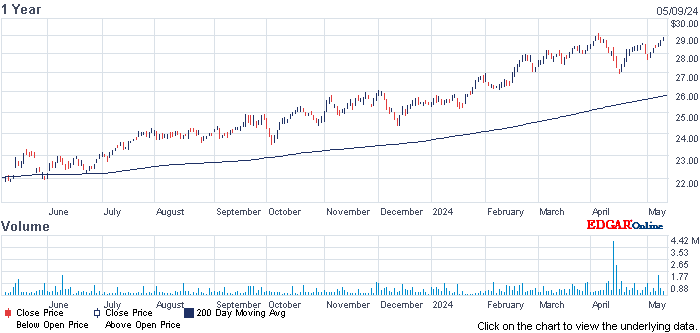
Dow dropped 122 (off session lows), decliners over advancers 4-3 & NAZ lost 12. The MLP index pulled back 4+ to the 245s & the REIT index rose 1+ to 380. Junk bond funds fluctuated & Treasuries were sold, bringing higher yields. Oil fell about 2 to the 61s & gold declined 11 to 1272, a low since late Dec (more on both below).
AMJ (Alerian MLP Index tracking fund)
![Live 24 hours gold chart [Kitco Inc.]](https://www.kitco.com/images/live/gold.gif?0.2180338269244485)









Oil prices fell as much amost 4%, brealking through a key support level, as rising US crude stockpiles helped offset concerns about a supply crunch. Crude futures declined despite a wave of geopolitical concerns, including political turmoil in Venezuela & the launch of new American measures aimed at driving Iran's crude exports to zero. West Texas Intermediate crude settled $1.81 lower at $61.81, tumbling 2.8% to its weakest closing price since Apr 1 Brent crude futures, the intl benchmark for oil prices, fell $1.43 (2%) to $70.75 per barrel. Brent fell as low as $69.68 earlier in the session. The drop was partly due to the overhang from yesterday's weekly report on US crude stockpiles, which showed inventories surging by 9.9M barrels. The data also showed US oil production ticking up to a record 12.3M barrels per day. US crude stockpiles have risen in 5 of the last 6 weeks, helping to ease the market's concern that global oil supplies are getting tight. Refiners are reportedly worried about supply shortages in light of US sanctions on Iran & Venezuela. DC yesterday stopped issuing waivers that allow several countries, including China & India, to purchase Iranian oil. The Trump administration restored sanctions on Iran's energy industry in Nov. Pres Trump is largely relying on Saudi Arabia to fill the gap left by Iranian supplies. Saudi Arabia has not explicitly committed to hiking output, but says it will respond to the market's needs.
US crude sinks 2.8% to one-month low, settling at $61.81, as supply concerns ease
Gold futures logged their lowest settlement YTD, a day after Federal Reserve Chairman Jerome Powell cast doubt about the prospect for a near-term rate reduction. Gold for Jun delivery on Comex fell $12.20 (1%) to settle at $1272 an ounce, after touching an intraday low at $1267. The settlement was the lowest for a most-active contract since Dec 24. Gold ended lower on yesterday, then extended losses in electronic trading as Powell, in a news conference following the Fed's widely expected decision to leave rates on hold, described subdued inflation pressures as “transitory.” Gold often moves in the opposite direction to the $, with a more expensive greenback making commodities priced in it more expensive to users of other currencies. The ICE $ rebounded in the wake of the Powell comments & was up 0.1% yesterday as gold futures settled. Meanwhile, data from the World Gold Council showed global demand for the precious metal rose 7% year-on-year in Q1.
The Congressional Budget Office reduced its projection of deficits from 2020 to 2029 by 2%, due to a lowering of its estimates of mandatory spending & net interest payments. The CBO anticipates a cumulative $12.7T worth of deficits over the next decade, with a $896B gap in 2019 & deficits exceeding $1T each year beginning in 2022. Between 2019 & 2029, federal debt held by the public is projected to grow from an amount equal to 78% of GDP to an amount equal to 92% of GDP, or more than twice the 50-year average.
Traders are coming to grips with the reality that the Federal Reserve may not be cutting interest rates this year after all. The likelihood that the central bank will reduce the overnight funds rate briefly fell below 50% for the first time in weeks. As recently as yesterday, traders had been assigning a 67% chance that the Fed would approve a ¼-point cut, most likely at the Dec meeting. Around noon today, the chance for a cut had been reduced to 52%. However, remarks from Fed Chairman Jerome Powell after the FOMC meeting pointed to a central bank not worried about lackluster inflation readings & instead committed to holding rates right where they are now, in a target range of 2.25-2.5%. Stocks dropped sharply during Powell's news conference & added to those losses today as the Dow Jones industrials lost nearly 250 points heading into midday. Market chatter increasingly had been pointing to the Fed approving an “insurance” rate cut to stave off a potential downturn in the economy, & Pres Trump earlier in the week called for a full percentage point reduction.
Traders slash expectations for a rate cut after the Fed says it’s staying put
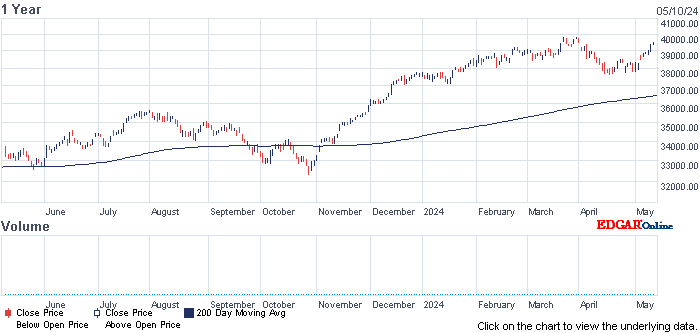
The Dow's low was at midday, down 250, & then recovered 100 in PM trading. Traders were unnerved to learn there is no rate cut on the radar screen at the Fed. Meanwhile, earnings & economic data are coming in so-so. Tomorrow the Apr jobs report is due before the markets open & that should move the stock market.
Dow Jones Industrials












AMJ (Alerian MLP Index tracking fund)
Oil prices fell as much amost 4%, brealking through a key support level, as rising US crude stockpiles helped offset concerns about a supply crunch. Crude futures declined despite a wave of geopolitical concerns, including political turmoil in Venezuela & the launch of new American measures aimed at driving Iran's crude exports to zero. West Texas Intermediate crude settled $1.81 lower at $61.81, tumbling 2.8% to its weakest closing price since Apr 1 Brent crude futures, the intl benchmark for oil prices, fell $1.43 (2%) to $70.75 per barrel. Brent fell as low as $69.68 earlier in the session. The drop was partly due to the overhang from yesterday's weekly report on US crude stockpiles, which showed inventories surging by 9.9M barrels. The data also showed US oil production ticking up to a record 12.3M barrels per day. US crude stockpiles have risen in 5 of the last 6 weeks, helping to ease the market's concern that global oil supplies are getting tight. Refiners are reportedly worried about supply shortages in light of US sanctions on Iran & Venezuela. DC yesterday stopped issuing waivers that allow several countries, including China & India, to purchase Iranian oil. The Trump administration restored sanctions on Iran's energy industry in Nov. Pres Trump is largely relying on Saudi Arabia to fill the gap left by Iranian supplies. Saudi Arabia has not explicitly committed to hiking output, but says it will respond to the market's needs.
US crude sinks 2.8% to one-month low, settling at $61.81, as supply concerns ease
Gold futures logged their lowest settlement YTD, a day after Federal Reserve Chairman Jerome Powell cast doubt about the prospect for a near-term rate reduction. Gold for Jun delivery on Comex fell $12.20 (1%) to settle at $1272 an ounce, after touching an intraday low at $1267. The settlement was the lowest for a most-active contract since Dec 24. Gold ended lower on yesterday, then extended losses in electronic trading as Powell, in a news conference following the Fed's widely expected decision to leave rates on hold, described subdued inflation pressures as “transitory.” Gold often moves in the opposite direction to the $, with a more expensive greenback making commodities priced in it more expensive to users of other currencies. The ICE $ rebounded in the wake of the Powell comments & was up 0.1% yesterday as gold futures settled. Meanwhile, data from the World Gold Council showed global demand for the precious metal rose 7% year-on-year in Q1.
Gold marks lowest finish since December with rate-cut bets cooled by Fed statements
The Congressional Budget Office reduced its projection of deficits from 2020 to 2029 by 2%, due to a lowering of its estimates of mandatory spending & net interest payments. The CBO anticipates a cumulative $12.7T worth of deficits over the next decade, with a $896B gap in 2019 & deficits exceeding $1T each year beginning in 2022. Between 2019 & 2029, federal debt held by the public is projected to grow from an amount equal to 78% of GDP to an amount equal to 92% of GDP, or more than twice the 50-year average.
CBO trims deficit projections on spending, interest payments
Traders are coming to grips with the reality that the Federal Reserve may not be cutting interest rates this year after all. The likelihood that the central bank will reduce the overnight funds rate briefly fell below 50% for the first time in weeks. As recently as yesterday, traders had been assigning a 67% chance that the Fed would approve a ¼-point cut, most likely at the Dec meeting. Around noon today, the chance for a cut had been reduced to 52%. However, remarks from Fed Chairman Jerome Powell after the FOMC meeting pointed to a central bank not worried about lackluster inflation readings & instead committed to holding rates right where they are now, in a target range of 2.25-2.5%. Stocks dropped sharply during Powell's news conference & added to those losses today as the Dow Jones industrials lost nearly 250 points heading into midday. Market chatter increasingly had been pointing to the Fed approving an “insurance” rate cut to stave off a potential downturn in the economy, & Pres Trump earlier in the week called for a full percentage point reduction.
Traders slash expectations for a rate cut after the Fed says it’s staying put
The Dow's low was at midday, down 250, & then recovered 100 in PM trading. Traders were unnerved to learn there is no rate cut on the radar screen at the Fed. Meanwhile, earnings & economic data are coming in so-so. Tomorrow the Apr jobs report is due before the markets open & that should move the stock market.
Dow Jones Industrials