Wednesday, August 7, 2019

Markets plunge again as 10 year Treasury yields fall to 1.6%

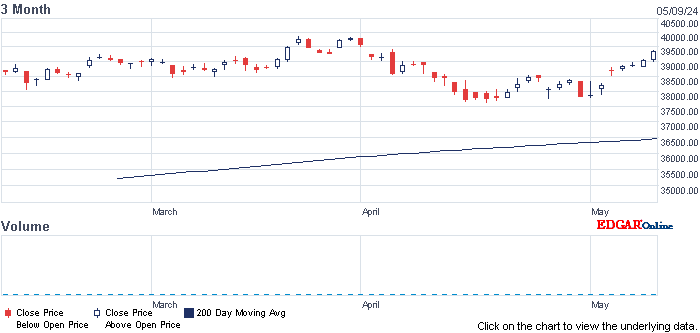
Dow tumbles 318 (but higher in the last hour), decliners over advancers almost 3-1 & NAZ drops 29.  The MLP index was off 4+ to the 228s & the REIT index drifted lower in the 387s.  Junk bond funds declined & Treasuries continue to be in heavy demand for risk averse investors.  Oil sinks 2+ to the 51s & gold surged 29 to 1513.

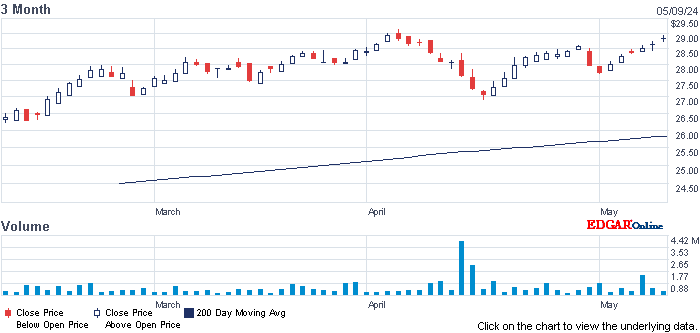
AMJ (Alerian MLP Index tracking fund)

CL=FCrude Oil51.58
    -2.05-3.8%

GC=FGold   1,518.80
 +34.60+2.3%


3 Stocks You Should Own Right Now - Click Here!


The Dow plunged 500 amid worries over the escalation in US-China trade war.  Stocks turned lower, giving up most of yesterday's gains after investors moved money to safe-havens such as gold & US gov bonds.  The 10-year Treasury yield tumbled to a fresh low of 1.622%, the lowest since Oct 4, 2016.  2 surprise interest rate cuts caught investor attention, raising concerns about global economic conditions.  New Zealand's central bank cut its official cash rate 50 basis points to a record low of 1%, which was larger than expected.  The Bank of Thailand followed suit, cutting its one-day repurchase rate by 25% points to 1.5%.  US stocks recouped some of their losses Tues after China backed off from a further escalation in the country's trade and currency dispute with DC, steadying financial markets.  The Dow, S&P 500 & NAZ all rose at least 1.2%.  Comments by St Louis Federal  Reserve Bank Pres James Bullard may have been offset by those by White House economic advisor Larry Kudlow.  Bullard said the US central bank may be stuck with a volatile global trade environment for years.  Kudlow said the Trump administration wants to continue trade talks with China & is still planning to host a Chinese delegation for talks in Sep.  Oil prices fell further as trade tensions eased. Brent crude dropped to a 7-month low.

DOW PLUNGES 500 PTS ON TRADE, ECONOMIC CONCERNS


Trump has been a persistent Fed critic even though it approved a qtr-point rate cut at its meeting a week ago.  Markets expect another cut at the Sep meeting, then one or even 2 more before the end of the year.  Waiting, though, isn't an option, Trump said, as he called on the Fed to act now.  "Our problem is not China - We are stronger than ever, money is pouring into the U.S. while China is losing companies by the thousands to other countries, and their currency is under siege - Our problem is a Federal Reserve that is too.....proud to admit their mistake of acting too fast and tightening too much (and that I was right!)."  Trump's tweet mistakenly implies that the Fed is still in the process of "quantitative tightening," a reference to reducing the amount of bonds the Fed is holding on its balance sheet by allowing a capped level of proceeds to roll off each month.  The policymaking FOMC at last week's meeting voted to end the program as of this month.  The pres also characterized the yield curve as "too wide" even though the gap between the 2-year & 10-year notes is at its narrowest since 2007 & the spread between other maturities continues to contract.  Still, he said the Fed could take care of its problems "sooo easily. We will WIN anyway, but it would be much easier if the Fed understood, which they don't, that we are competing against other countries, all of whom want to do well at our expense!"

Trump calls for the Fed to cut rates 'bigger and faster' and says China is not the problem

Falling mortgage rates & strong employment drove consumer confidence in housing to a record high in Jul, according to a monthly index from Fannie Mae.  At the same time, bidding wars eased thanks to lower demand in some of the hottest markets.  Of the index's 5 components, “confidence about not losing job” & “mortgage rates will go down” rose the most.  The gains come despite a very low supply of homes for sale & affordability challenges.  Mortgage rates have fallen dramatically this spring, down from a high of around 4.5% at the start of this year to 3.85% at the end of Jul.  But rates have fallen even further this week & the economic concerns driving those rates lower could actually hurt housing sentiment going forward.  Tensions over the escalating trade war with China & falling bond yields around the world have caused a sell-off in the US stock market.  “Consumers appear to have shaken off a winter slump in sentiment amid strong income gains. Therefore, sentiment is positioned to take advantage of any supply that comes to market, particularly in the affordable category. However, recent financial market events following when the survey data were collected could weigh on consumer views looking ahead,” said Fannie Mae's chief economist Doug Duncan.  As of Jul, more consumers said it was a good time to buy a home & fewer said they expected home prices to go up over the next year, according to the survey.  Home price gains have been moderating this year & bidding wars actually fell to the lowest rate since 2011, according to a new report from Redfin, a real estate brokerage.  Just 11% of offers written by Redfin agents faced a bidding war in Jul, down from more than 45% a year ago.

Housing sentiment hits record high, as bidding wars vanish

Investors again rushed for the safety of gov bonds & dumped stocks, exacerbating the Aug exodus away from risk assets as traders around the world settled in for a US-China trade war without an end in sight.  The flight to safety sent the yield on the 10-year Treasury note, used as a benchmark for mortgage rates & auto loans, falling to a low of 1.595%, the lowest since autumn 2016.  The yield on the 30-year Treasury bond bottomed around 2.12%, near its all-time low reached in 2016.   The 10-year Treasury rate is about 40 basis points below its level one month ago, down more than 35 basis points in Aug alone & representing a sizable move for the relative stable US bond market.  The yield ended Jul above 2%.  Bond yields move inversely to their prices; yields fall when investors demand Treasuries.  European rates in Germany & the UK clinched record lows across the board today.  The yield on the German 10-year bund hit a new all-time low of -0.6% while the 30-year bund also hit a record at -0.137%.  The 2-year German yield touched -0.849%.  The UK 10-year & 30-year yields both hit record lows at 0.432% & 1.081%, respectively.  The Treasury yield curve also exacerbated its recent flattening & inversion, with the spread between the yield on the 3-month Treasury bill & that of the 10-year Treasury note close to -40 basis points.   The spread between the 2-year Treasury yield & the 10-year yield, a longtime recession gauge, hit a low of 7.4 basis points, its lowest level since 2007.

10-year yield drops under 1.6%, 30-year yield nears record low as collapse in rates accelerates

Risk averse is the key investment goal for investors.  Gold & Treasuries are in heavy demand.  But after heavy selling at the opening, the popular stock averages are recovering to dome degree.  Market breadth is less painful than yesterday's 10-1 ratio.  But it's still one solid negative.  Even with bargain hunting in the last hour, the Dow is down over 1K in Aug.  One ugly start for what is supposed to be a quiet, summer month for stocks.

Dow Jones Industrials

Tuesday, August 6, 2019

Markets rebound after yesterday's selloff

Dow jumped up 311 (session highs & back of 26K), advancers over decliners better than 2-1 & NAZ advanced 107.  The MLP index was off another 1+ to the 233s & the REIT index rose 4 to the 387s.  Junk bond funds inched higher & Treasuries drifted slightly lower in price.  Oil fell to the high 53s & gold added 7 to 1483 (more on both below). 

AMJ (Alerian MLP Index tracking fund)



Bad weather & a tumultuous trade relationship between the US & China have already resulted in a bad year for American farmers — but that outlook darkened, after Beijing pulled its purchases of US agricultural products.  “This is a body blow to farmers and ranchers all across the country,” Dale Moore, exec VP of the American Farm Bureau, said.  “That’s one of the things that we are feeling the effects of, and this is on top of a year when mother nature has been a terrible business partner in many parts of the country. It’s just a really tough, tough time for farmers and ranchers in this country.”  Shares of industrial, farming, oil & transportation companies have plummeted, a direct result of the increased tensions between the 2 largest economies.  Since 2017, farmers have lost more than ½ of their market exports in terms of value, plunging to about $9B in exports from close to $20B 2 years ago, Moore said.  And while aid from the Trump administration has helped to cushion the blow — the White House approved a 2nd $16B funding package to offset the trade war's effects on American agriculture last week — Moore stressed that negotiators need to return to the table in order to strike a deal. Talks resume next month in China.  “We’ve seen impacts on virtually every commodity,” he added.  “You cannot say it’s an idle threat, because China has been hammering us for the past couple of years. We went from near $20 billion to $9 billion. We’ve already taken a $10 billion hit.”  Plus, farmers & ranchers feel like they’re caught in the crosshairs of a fight that's larger than them — including disputes over intellectual property theft, industrial goods & steel & aluminum tariffs.  Compounded with bad weather — farmers in the Midwest saw one of the rainiest seasons on record this year, stunting their crops’ growth — farmers are facing an increasingly dire situation.  In a sign indicative of how tough things are in agriculture, Moore said, farm bankruptcies are on the rise, above the historical average.

CHINA TARGETS US AGRICULTURE, DEALING FARMERS ANOTHER DEVASTATING BLOW


There has been a “sea change” in Federal Reserve policy over the past several months that will need time to make its way thru the system before its effects can be gauged, St. Louis Fed Pres James Bullard said.  Easier monetary policy has resulted in a plunge in gov bond yields, taking the benchmark 10-year Treasury note down from around 2% in mid-Jun to around 1.74%.  That drop comes less than a week after the Fed voted to lower its benchmark interest rate by 25 basis points to 2-2.25%.  Bullard has been one of the biggest advocates for a cut, but in a speech he did not commit to further moves.  “While additional policy action may be desirable, the long and variable lags in the effects of monetary policy suggest that the effects of previous actions are only now beginning to impact macroeconomic outcomes,” he said.  His comments reiterated statements he previously, saying that he wants to see the impact of the rate cut before assessing further moves.  Bullard noted the impact that the escalating trade war has had to stunt economic growth & said the inverted yield curve also “continues to threaten.”  Markets widely expect another ¼ percentage point rate reduction at the Sep meeting & is pricing in a small probability of a ½-point cut.  “The bottom line is that U.S. monetary policy is considerably more accommodative today than it was as of late last year,” Bullard said.

Fed’s Bullard: Let’s see what the rate cut did before approving more

Job openings edged lower in Jun as the labor market continues to tighten, the Labor Dept reported.  Employment vacancies fell to 7.35M from 7.38M in May, according to the Job Openings & Labor Turnover Survey (JOLTS).  The JOLTS report is closely watched by Federal Reserve policymakers as a measure for slack in the labor market.  The change in job openings left the gap between vacancies & those considered unemployed at 1.37M, a decrease of 123K from May.   Unemployed workers are defined as those out of work who have looked for a job & are available for hire.  Trade, transportation & utilities vacancies stood at 1.4M, while education & health services & professional & business services were close behind with about 1.3M  each.

There are still 1.4 million more jobs than unemployed people, but the gap is closing

Gold prices finished regular trade modestly higher, marking a 3rd straight gain a day after the precious metal extended its rally toward fresh 6-year highs, amid escalating trade policy tensions between China & the US.  Gold for Dec delivery rose $7.70 (0.5%) to settle at $1484 after ending 1.3% higher yesterday, extending its highest finish for a most-active contract close since 2013.  Bullion has been gaining traction on the back of worries that the US-China tariff conflict won't subside soon.  An environment with debt yields also hovering at ultralow levels, & in many cases negative levels, also has supported buying of the yellow metal, which tends to rise during times of global economic uncertainty.  Today, equity markets recovered some ground, after seeing the biggest one-day fall of the year yesterday, after China's central bank fixed its widely watched onshore currency at a level higher than expected, a move interpreted by some as a sign of some softening in trade tensions.  Still, commodity traders said gold & other precious metals could prosper against a backdrop of weakening global economic growth & continued anxieties on intl trade with no immediate resolution in sight.

Gold futures book third straight gain, hold near 6-year high

Oil futures prices closed sharply lower — including a roughly 7-month low for intl benchmark Brent — as contracts gave up early gains once the stock market pared its recovery.  Oil fell as questions persisted over global demand for energy, uncertainty that’s tied to US tensions with major trade partners.  West Texas Intermediate (WTI) crude for Sep was down $1.06 (1.9%) to $53.63 a barrel, the lowest finish since Jun 17.  WTI traded in positive territory briefly today, up to $55.42.  Crude fell 1.7% yesterday & WTI is now off 19% from its 2019 settlement high of $66.30 hit on Apr 23.  Global benchmark Oct Brent crude fell 87¢ (1.4%) at $58.94 a barrel, the lowest in 7 months.  It traded up to $60.56 earlier, but has now shed 4.7% so far this week.  That trims the YTD gain to about 9.5%.  Oil prices remained lower as US gov data for the sector forecast growth in the Permian basin & other shale formations would largely offset production losses from the Gulf of Mexico due to Hurricane Barry.  The Energy Information Administration (EIA) said in its short-term outlook issued today that Brent crude spot prices will average $64 a barrel in H2 & $65 in 2020.  The forecast of stable crude oil prices is the result of EIA's expectations of a relatively balanced global oil market.  EIA forecasts that WTI crude oil prices will average $5.50 per barrel less than Brent prices from Q4-2019 thru the end of 2020.  That’s a wider gap than the $4 below Brent predicted in last month's report.  The wider forecasted Brent-WTI differential reflects EIA updated assumptions about the marginal cost of transporting crude oil via pipeline from Cushing, Okla, to the Gulf Coast.  Meanwhile, US crude-oil stocks likely fell for an 8th straight week last week amid an uptick in refinery utilization.   Commercial crude inventories are expected to have declined 3.8M barrels last week.  Further, a slowdown in crude exports likely limited the size of the expected draw.  Exports last week averaged 1.97M barrels per day.  If weekly EIA oil data bears this out, exports will be at their weakest since Jan & only the 2nd time this year that they have slipped under 2M b/d, according to EIA data.

Oil prices surrender recovery gains, tracking volatile stock market


Buyers returned in the PM & took the Dow to session highs in the last hour of trading.  Markets breadth is so-so, could have been better.  The bounce back is almost impressive.  The Volatility Index (VIX) dropped 4+ to go under 20.  But that compares with the low teens earlier this year.  Gold continues to be in demand by negative thinking investors as the trade mess drones on!!

Dow Jones Industrials


Markets recover some of yesterday's losses

Dow rebounded 88, advancers over decliners 3-2 & NAZ rose 69.  The MLP index fell another 2+ to the 232 & the REIT index rose 4+ to the 387s.  Junk bond funds fluctuated & Treasuries were bid higher.  Oil crawled higher in the 54s & gold went up 5 to 1481, another multi year high.

AMJ (Alerian MLP Index tracking fund)


CL=FCrude Oil54.81
+0.12+0.2%

GC=FGold   1,477.90
+1.40 +0.1%


3 Stocks You Should Own Right Now - Click Here!


Major US equity markets moved to stem yesterday's financial carnage, trading higher  recouping a portion of the prior session's losses.  Stocks were rebounding after the Dow fell 2.9% , notching its biggest one-day percentage drop since Dec.  The bloodbath continued with the S&P 500 shedding 3% & NAZ declined 3.5%.  The stock-market declines, which have extended for 6 straight sessions, began last week after Pres Trump said he would extend tariffs to almost all Chinese imports.  Selling accelerated yesterday after the Chinese yuan dropped beyond the level of 7 to the $.  Trump responded, accusing China of engaging in currency manipulation.  Asian stocks followed Wall Street with losses on today while European markets traded higher after China let its currency sink further & halted purchases of US farm goods, fueling fears about global damage from its trade war.  Markets in Shanghai, Tokyo & Hong Kong closed lower.

US STOCKS CLAW BACK FROM WORST DAY OF 2019


The US is counterpunching China in the latest battle royale that has become the US-China trade war.  The Treasury Dept officially declared China a currency manipulator, after the yuan fell to a more than 10-year low against the $ overnight.  Secretary Steve Mnuchin, with the support of Pres Trump, determined that China is in fact unfairly influencing its currency – allegations that had been made by the president multiple times throughout the day.  “In recent days, China has taken concrete steps to devalue its currency, while maintaining substantial foreign exchange reserves despite active use of such tools in the past,” the Treasury Dept said.  “The context of these actions and the implausibility of China’s market stability rationale confirm that the purpose of China’s currency devaluation is to gain unfair competitive advantage in international trade.”  The Treasury Dept will work with the IMF to try to rectify the “unfair competitive advantage created by China's latest actions.”  Earlier, Trump said China has “always used currency manipulation to steal our businesses and factories, hurt our jobs, depress our workers’ wages and harm our farmers’ prices.”  Trump also said the currency manipulation was a “major violation that would greatly weaken China over time.”  The yuan's movement combined with the administration’s announcement that it plans to impose 10 % tariffs on the remaining $300B worth of Chinese goods coming into the UX next month, sent markets spiraling.

Trump administration designates China a currency manipulator

Pres Trump said  that “massive amounts” of money are pouring into the US from foreign countries, saying the nation is in a “very strong position.”  "Massive amounts of money from China and other parts of the world is pouring into the United States for reasons of safety, investment, and interest rates!” Trump tweeted.  “We are in a very strong position. Companies are also coming to the U.S. in big numbers. A beautiful thing to watch!”  His tweet comes as the ongoing trade war with China escalates.  The Treasury Dept, led by Secretary Steve Mnuchin labeled Beijing a currency manipulator, echoing comments Trump made earlier that day.  “China has always used currency manipulation to steal our businesses and factories, hurt our jobs, depress our workers’ wages and harm our farmers’ prices,” Trump tweeted yesterday.  “Not anymore!”  Trump's statement caused US equity markets to accelerate losses, which had carried over from Fri's trading session.

Trump: China, other nations pouring money into US


Pres Trump pledged to stand by American farmers as trade tensions with China escalate & fears about the US agriculture industry grow.  “As they have learned in the last two years, our great American Farmers know that China will not be able to hurt them in that their President has stood with them and done what no other president would do - And I’ll do it again next year if necessary!” Trump tweeted.  The US agriculture industry has been a centerpiece of the trade spat with China, as the world's 2nd-largest economy is one of the American farm industry's top buyers.  The country announced yesterday that it will suspend the purchases of US agricultural products, a direct response to Trump's announcement last week that the US would impose a 10% tariff on $300B of Chinese exports.  “This is a serious violation of the meeting between the heads of state of China and the United States,” a spokesperson for China’s Ministry of Commerce said, adding that it won’t “rule out import tariffs on newly purchased US agricultural products after August 3.”

US-China trade war: Trump pledges to support American farmers


White House economic advisor Larry Kudlow said the US holds the upper hand in trade negotiations with China due to the comparative strength of the US economy.  “The Chinese economy is crumbling. It’s just not the powerhouse it was 20 years ago,” Kudlow said.  “Any long chart of Chinese investment” or economic metrics shows “a steady downdraft,′ he added.  “Their GDP, which is probably inflated by several points, is coming in lower and lower.”  China reported that its economy grew 6.2% in Q2, its weakest growth rate for GDP in at least 27 years.  Also, Chinese stocks are broadly dropping: The Shanghai composite index of stocks has fallen over 15% from its high in the past year.  By comparison, the S&P 500 is just 5% below its high in the past year & has climbed nearly 15% in 2019.  Kudlow's comments come as US stocks rebounded after the worst day of 2019, dropping when China retaliated to Pres Trump's announcement that new tariffs would be placed on Chinese goods in Sep.  The trade war escalated to a new level on yesterday but Kudlow said that the US “would like to negotiate” & “make a deal.”  Kudlow said China may hold out on a trade deal, but he insisted that the US can withstand any slowdown to its economy better than the Chinese can.  “I think China is getting hurt significantly, much more than we are,” Kudlow added.  “The American economy is very strong. Theirs is not.”

Trump economic advisor Larry Kudlow says China’s economy ‘is crumbling’

Bargain hunters are buying, but not in great strength.  The Dow is down 1.5K from the mid Jul peak & the outlook is glum with all the uncertainties out there.

Dow Jones Industrials