

Dow was up 9, advancers ahead of decliners 3-2 & NAZ gained 12 (helped by a big pop in Apple after winning its lawsuit). The Financial Index had a small gain to 204. The MLP index was up pocket change in the 391s & the REIT index was up fractionally in the 264s. Junk bond funds had minor fluctuations & Treasuries were slightly higher. Oil fell on speculation that Tropical Storm Isaac will have limited impact on oil production in the Gulf of Mexico. Gold is holding after its recent run up, speculating on negative effects from more bailouts.
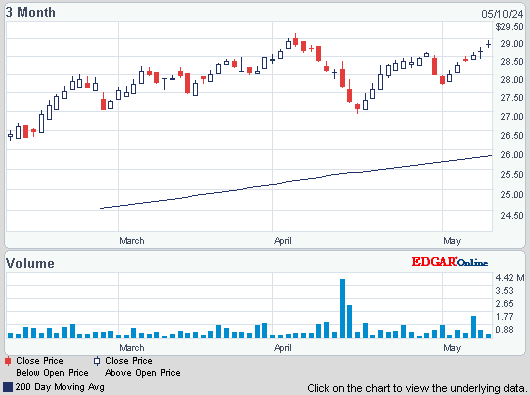


Photo: Bloomberg
German business confidence fell for a 4th straight month in Aug as the sovereign debt crisis curbed growth in Europe's largest economy. The Ifo institute said its business climate index dropped to 102.3 from 103.2 in Jul, the lowest reading since Mar 2010. Predictions were for a decline to 102.7. German economic growth slowed to 0.3% in Q2 from 0.5% in Q1 as the debt crisis damped demand for exports & prompted companies to postpone investments. While sales to faster-growing markets outside Europe & domestic spending are helping to insulate Germany from the turmoil, the Bundesbank said last week that the prevailing uncertainty may cause the economy to cool further. Ifo’s gauge of the current situation eased to 111.2 from 111.5 in Jul, while a measure of executives’ expectations fell to 94.2, the lowest since Jun 2009, from 95.5. The debt crisis has driven up borrowing costs in Spain & Italy, threatening the survival of the € & undermining confidence in Germany, which sells about 40% of its exports to the euro area. German capital investment fell 0.9% in Q2 from Q1, with spending on plant & machinery down 2.3% & construction spending falling 0.3%.
German Business Confidence Falls for a Fourth Month
Germany's top central banker has repeated his opposition to the ECB intervening in bond markets to lower borrowing costs for indebted govs such as Spain & Italy, saying govs might get too used to the outside help. Bundesbank head Jens Weidmann said that govs could become dependent on such help rather than fixing their finances. He said "we should not underestimate the danger that central bank financing can be as addictive as a drug." Weidmann, who sits on the the ECB governing council, also said that the risk of losses on those bonds would ultimately be borne by eurozone taxpayers. Elected parliaments, not central banks, should make such decisions, he said. He argued that buying bonds would also be too close to using the central bank's monetary powers to support gov finances, which the EU treaty forbids the bank to do. ECB head Mario Draghi has said the bank may buy gov bonds if troubled govs first ask for help from the eurozone bailout fund. The ECB would make purchases only after the country involved agreed to a list of conditions aimed at reducing its deficits & debts. It would buy the bonds together with the eurozone bailout fund. More euro bailouts are not a done deal.
Top German central banker opposes ECB bond buying AP
Photo: Yahoo
Tiffany cut its sales & earnings forecasts for the 2nd straight qtr, citing a tough global economy & muted expectations for the holiday season. Shares rose on expectations that pressure on margins from gold & diamond costs are at last easing. Gross margin should start to rise again in the holiday qtr, its biggest of the year by far. TIF reduced its global net sales growth forecast by 1 percentage point to 6-7% for the year ending in Jan. Growth was guided as modest than the 30% pace of a year earlier. This forecast reduction, which follows one in May, came in large part because TIF now assumes sales growth during the holidays will be slower. The full-year EPS outlook is $3.55-$3.70 from $3.70-$3.80, coming in line with expectations of $3.64. Despite the cautious forecasts, TIF is proceeding with the expansion plans that have supported its fast growth in recent years. Ir expects to open 28 stores by the end of the year, including in Toronto & Manhattan's SoHo neighborhood, up from the 24 initially planned. Global sales rose 1.6% to $886.6M in the Q2. Sales at stores open at least a year fell 1%, excluding the impact of currency fluctuations. Same-store sales dropped 5% in the Americas. They also declined 5% in the Asia Pacific region that includes China. EPS was 72¢, up from 69¢ a year earlier but missed the estimate by a penny. The stock rose 3.89.
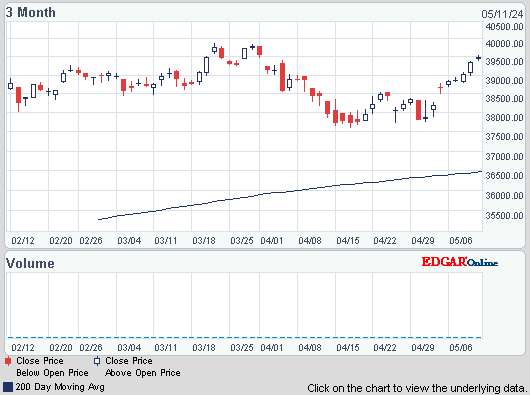
This is shaping up as a quiet week with more traders going away on holiday. But there is always the possibility of excitement coming from Europe related to positive or negative indications about more bailouts. Big Ben will have something to say on Fri which has the potential to move markets. Dow, at 13.1K, is where it was in mid Mar.
AMJ (Alerian MLP Index tracking fund)
Treasury yields:
U.S. 3-month | 0.096% | |
U.S. 2-year | 0.261% | |
U.S. 10-year | 1.647% |
| CLV12.NYM | ....Crude Oil Oct 12 | ...95.11 | ... 1.04 1.04 | (1.1%) |
| GCQ12.CMX | ...Gold Aug 12 | .....1,669.50 | ... 0.30 | (0.0%) |
Get the latest daily market update below:
German business confidence fell for a 4th straight month in Aug as the sovereign debt crisis curbed growth in Europe's largest economy. The Ifo institute said its business climate index dropped to 102.3 from 103.2 in Jul, the lowest reading since Mar 2010. Predictions were for a decline to 102.7. German economic growth slowed to 0.3% in Q2 from 0.5% in Q1 as the debt crisis damped demand for exports & prompted companies to postpone investments. While sales to faster-growing markets outside Europe & domestic spending are helping to insulate Germany from the turmoil, the Bundesbank said last week that the prevailing uncertainty may cause the economy to cool further. Ifo’s gauge of the current situation eased to 111.2 from 111.5 in Jul, while a measure of executives’ expectations fell to 94.2, the lowest since Jun 2009, from 95.5. The debt crisis has driven up borrowing costs in Spain & Italy, threatening the survival of the € & undermining confidence in Germany, which sells about 40% of its exports to the euro area. German capital investment fell 0.9% in Q2 from Q1, with spending on plant & machinery down 2.3% & construction spending falling 0.3%.
German Business Confidence Falls for a Fourth Month
Germany's top central banker has repeated his opposition to the ECB intervening in bond markets to lower borrowing costs for indebted govs such as Spain & Italy, saying govs might get too used to the outside help. Bundesbank head Jens Weidmann said that govs could become dependent on such help rather than fixing their finances. He said "we should not underestimate the danger that central bank financing can be as addictive as a drug." Weidmann, who sits on the the ECB governing council, also said that the risk of losses on those bonds would ultimately be borne by eurozone taxpayers. Elected parliaments, not central banks, should make such decisions, he said. He argued that buying bonds would also be too close to using the central bank's monetary powers to support gov finances, which the EU treaty forbids the bank to do. ECB head Mario Draghi has said the bank may buy gov bonds if troubled govs first ask for help from the eurozone bailout fund. The ECB would make purchases only after the country involved agreed to a list of conditions aimed at reducing its deficits & debts. It would buy the bonds together with the eurozone bailout fund. More euro bailouts are not a done deal.
Top German central banker opposes ECB bond buying AP
Tiffany cut its sales & earnings forecasts for the 2nd straight qtr, citing a tough global economy & muted expectations for the holiday season. Shares rose on expectations that pressure on margins from gold & diamond costs are at last easing. Gross margin should start to rise again in the holiday qtr, its biggest of the year by far. TIF reduced its global net sales growth forecast by 1 percentage point to 6-7% for the year ending in Jan. Growth was guided as modest than the 30% pace of a year earlier. This forecast reduction, which follows one in May, came in large part because TIF now assumes sales growth during the holidays will be slower. The full-year EPS outlook is $3.55-$3.70 from $3.70-$3.80, coming in line with expectations of $3.64. Despite the cautious forecasts, TIF is proceeding with the expansion plans that have supported its fast growth in recent years. Ir expects to open 28 stores by the end of the year, including in Toronto & Manhattan's SoHo neighborhood, up from the 24 initially planned. Global sales rose 1.6% to $886.6M in the Q2. Sales at stores open at least a year fell 1%, excluding the impact of currency fluctuations. Same-store sales dropped 5% in the Americas. They also declined 5% in the Asia Pacific region that includes China. EPS was 72¢, up from 69¢ a year earlier but missed the estimate by a penny. The stock rose 3.89.
Tiffany (TIF)
This is shaping up as a quiet week with more traders going away on holiday. But there is always the possibility of excitement coming from Europe related to positive or negative indications about more bailouts. Big Ben will have something to say on Fri which has the potential to move markets. Dow, at 13.1K, is where it was in mid Mar.
Dow Jones Industrials
Get your favorite symbols' Trend Analysis TODAY!


 1.70
1.70![Live 24 hours gold chart [Kitco Inc.]](http://www.kitco.com/images/live/gold.gif)


